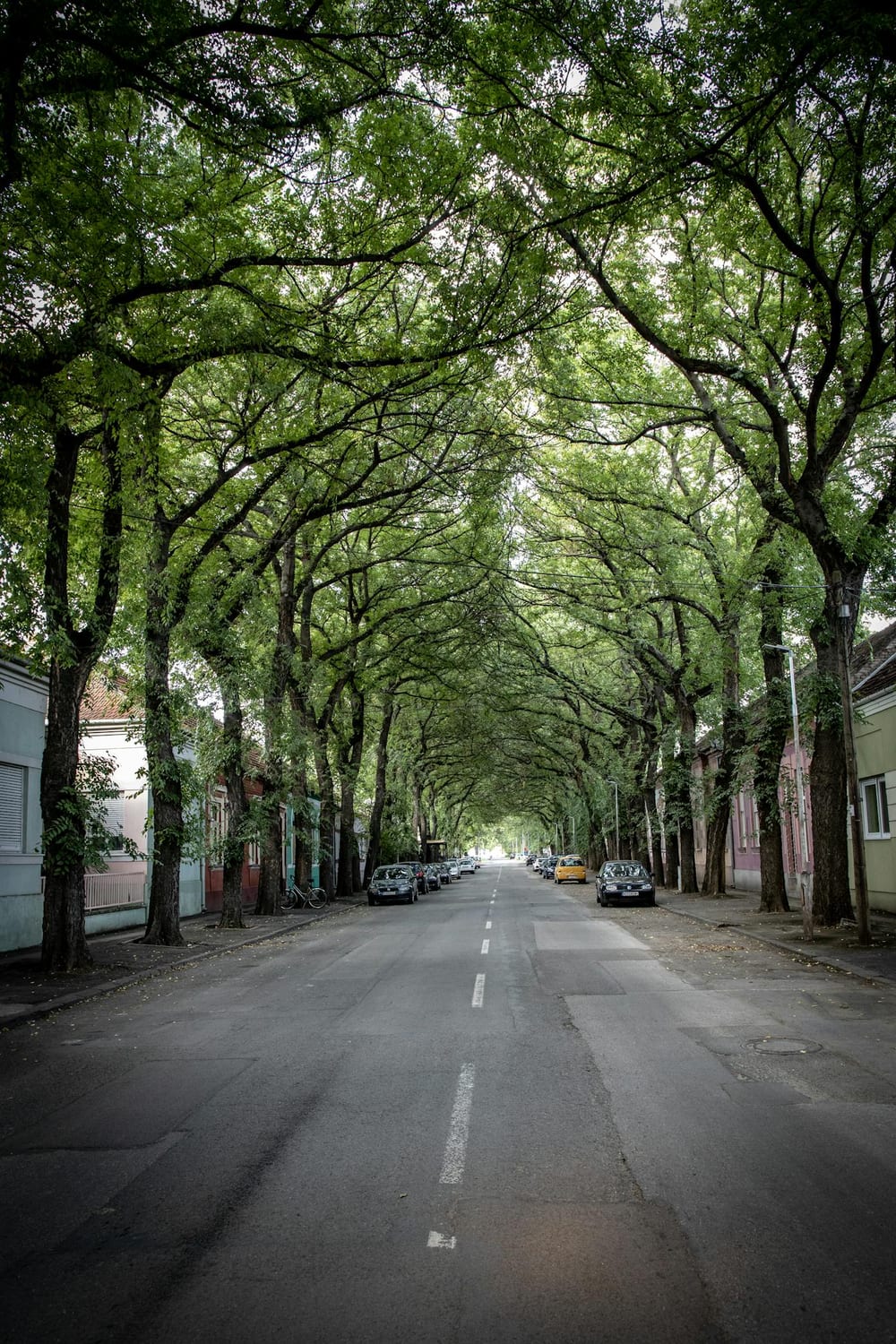
If you own a home in an older Wichita neighborhood — College Hill, Riverside, Crown Heights, Delano, parts of Park City, parts of east Wichita built before the 1980s — there is a fairly good chance you are eventually going to ask the same question: is that big tree out front damaging my foundation? Maybe a contractor mentioned it during a roof estimate. Maybe you noticed a hairline crack running up the basement wall. Maybe a neighbor's driveway buckled and the talk on the block has been about whose tree did it. Concerns about tree roots and foundation damage in Wichita are one of the most common things homeowners call us about during the spring after heavy rains, and for good reason — Kansas clay soil, mature trees planted decades ago, and aging concrete are a combination that produces a lot of legitimate questions and a lot of unnecessary panic.
This guide is the conversation we have during free estimates, written down. It walks through how tree roots actually grow, why Wichita's soil makes this a different problem than most online advice acknowledges, what kind of damage roots can really cause to foundations, driveways, sidewalks, and sewer lines, and — most importantly — what to do about it. Sometimes the answer is removal. Often it is not. Knowing the difference saves Wichita homeowners thousands of dollars every year.
How Tree Roots Actually Grow (and Why the Cartoon Picture Is Wrong)
Most people imagine a tree's root system as a mirror image of its canopy — a deep, branching structure that plunges straight down, mimicking the shape of the trunk and limbs above. That picture is almost entirely wrong, and it is the source of most of the bad intuition homeowners have about root damage.
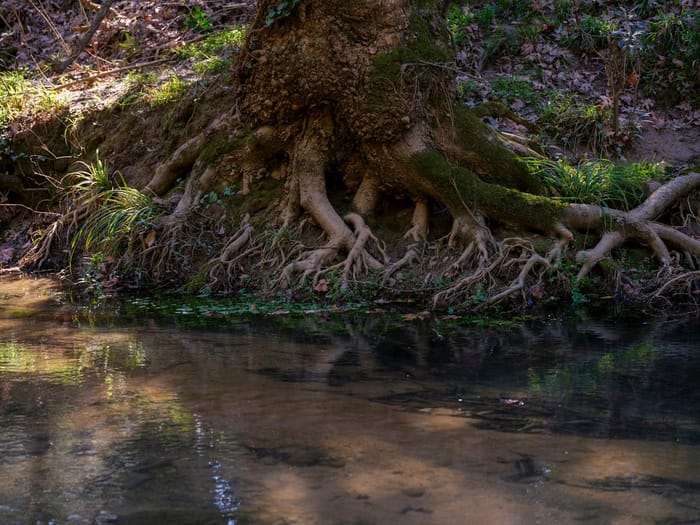
The reality looks more like a flat plate. The vast majority of a tree's absorbing roots — the small, fibrous roots that take up water and nutrients — live in the top 12 to 18 inches of soil. They have to. That is where the oxygen, the seasonal moisture, and the organic material are. The structural roots, the larger anchoring roots, run somewhat deeper but still stay relatively shallow. Only a small handful of "sinker" roots actually plunge down, and even those rarely go deeper than three to five feet.
What roots do do is spread laterally, often dramatically. A mature shade tree's root zone typically extends two to three times the radius of the canopy — sometimes more. A 60-foot oak with a 50-foot canopy can have functional roots reaching 75 to 100 feet from the trunk in every direction, including straight under your house, your driveway, your sewer line, and your neighbor's foundation.
That is the geometry that matters. Tree roots are not deep. They are wide, shallow, and opportunistic — they go wherever moisture and oxygen are easiest to access. Which, in Wichita, is a critical detail.
Why Wichita Soil Makes This a Different Problem
Most of the Wichita metro sits on heavy clay soil. In some neighborhoods it is the kind of clay that turns into modeling clay when you cup it in your hand after a rain and into something close to fired pottery during a dry August. This is the same expansive clay that sits across most of south-central Kansas, and its behavior is the single most important variable in any conversation about tree roots and foundations.
Expansive clay does what its name says: it expands when wet, sometimes by 10 to 20 percent of its volume, and it contracts when dry. This swelling and shrinking exerts enormous force on anything embedded in the soil — including foundation footings, driveway slabs, sidewalks, and underground utility lines. Across Sedgwick County, a significant fraction of foundation movement that homeowners attribute to tree roots is actually being caused by the clay itself, with the tree playing a supporting role at most.
That distinction matters. A foundation crack on the side of the house with the big silver maple is suspicious — but it is not automatically the tree's fault. To know what is actually happening, you need to understand what role roots play in clay soil movement. There are essentially three:
- Roots dry out the clay. A large tree pulls hundreds of gallons of water per day from the soil during the growing season. On the side of the house where the tree is, the soil stays drier than on the other sides — which means it shrinks more in summer and rebounds more after rain. The result is uneven movement under the foundation.
- Roots create channels for water to follow. Where major roots have grown along or under a foundation, the disturbed soil along those channels behaves differently than the surrounding undisturbed clay. Water flows in, soil moves, and movement concentrates along those paths.
- Roots, in some cases, exert direct pressure. This is the cartoon-version damage everyone pictures, and it does happen — but it is far less common than the indirect mechanisms above. Roots almost never punch through solid concrete. They follow joints, gaps, and existing cracks, and they expand inside those weak points as the tree grows.
Knowing which of these mechanisms is at play in your specific situation is the difference between a $400 root pruning visit, a $1,500 tree removal, and a $30,000 foundation repair that may or may not actually solve the problem. We will walk through how to tell.
Real Damage vs. Cosmetic Concerns
Not every interaction between a tree and your hardscape is a problem worth fixing. Here is how we triage what we see during estimates in Wichita.
Surface roots in the lawn (mostly cosmetic)
Roots breaking the surface of a lawn — those familiar ridges of bark running across the grass — are almost always a cosmetic issue rather than a structural one. They are unsightly, they make mowing harder, and they sometimes catch a foot, but they are not damaging anything you should be paying to fix. They are the natural behavior of a shallow root system in compacted, heavily mowed soil. Removing them, or worse, cutting them, can destabilize a tree without solving any real problem. The right move is to mulch over them and stop mowing right next to them.
Lifted sidewalk panels (real, usually slow)
Lifted public sidewalk slabs are real damage, but they are usually slow-moving and rarely an emergency. In Wichita, sidewalk repair responsibility typically falls on the adjacent property owner, and the city will sometimes flag a heaved panel for repair. The tree itself often does not need to come out to fix the sidewalk — concrete grinders can shave a heaved edge, mud-jacking can lift a sunken panel, or a single panel can be replaced with a flexible joint at the tree side. Saving a mature tree by repairing the sidewalk around it is almost always the right call when the tree is otherwise healthy.
Driveway cracks and heaving (real, often expensive)
Driveways are a bigger problem because they are larger contiguous slabs and homeowners pay for them directly. A driveway that is cracking and heaving along the side closest to a large tree is usually being affected by the tree, but again — clay-soil movement is often the primary driver, with the tree as a contributor. If the driveway needs to be replaced anyway, it is worth thinking carefully about whether you replace it with the tree still there. A new driveway poured around an actively growing 30-year-old hackberry will start showing the same cracks within five to ten years.
Sewer and water line intrusion (real, often misattributed)
This is one of the most commonly blamed forms of "tree damage," and the truth is more complicated. Tree roots do invade sewer lines — but in almost every case we see in Wichita, the underlying problem is that the line was already compromised. Older homes in Wichita commonly have clay or cast-iron sewer pipes with mortar joints. Those joints leak small amounts of moisture into the surrounding soil. Roots, doing exactly what they are supposed to do, follow that moisture, find the joint, and push into the pipe. Once inside, they thrive in the constant water supply and grow into a mat that blocks the line.
Removing the tree does not fix the underlying pipe. Roots from neighboring trees will eventually find the same joint. The real fix is replacing the compromised section of line with modern PVC, which has solvent-welded joints that roots cannot exploit. We see this pattern most often in homes built before 1980 — much of the housing stock in central and east Wichita.
Foundation cracks and settling (real, the most serious)
This is the one that keeps homeowners up at night, and the one that requires the most careful diagnosis. Vertical hairline cracks that follow a brick course or appear at corners of windows and doors are common in Wichita homes and are typically caused by clay-soil movement, freeze-thaw cycles, and normal foundation settling. They may have nothing to do with any tree on the property.
What we look for during an estimate when a homeowner is concerned about root damage is a cluster of indicators: foundation cracks specifically on the side closest to a large tree, doors and windows binding on that side, the basement floor sloping toward that wall, and visible root flare bulging the soil right against the foundation. When all of those line up on the tree side and the opposite side of the house is fine, the tree is contributing — through the soil-drying mechanism described above as much as direct pressure. Even then, the right next step is rarely "remove the tree immediately." It is "get a structural engineer or experienced foundation contractor to evaluate, and a tree professional to evaluate, and make a coordinated decision."
Which Wichita Tree Species Cause the Most Trouble
Not all trees are equally aggressive. Some species have notoriously invasive root systems and a long track record of being implicated in foundation, driveway, and utility-line damage. Others are well-behaved neighbors. In the Wichita area, these are the species we most often see at the center of root problems:
- Silver maple (Acer saccharinum). By far the most common offender we see. Silver maples were planted as cheap, fast-growing shade trees throughout Wichita from the 1950s through the 1980s, and their root systems are extremely shallow, extremely aggressive, and extremely good at finding moisture. If a homeowner calls us about roots cracking a driveway in central Wichita, the tree in question is a silver maple about two times out of three.
- Cottonwood (Populus deltoides). Massive, fast-growing, and aggressive. Common in older Park City neighborhoods, along the Arkansas River corridor, and in older lots throughout the metro. Their roots can extend astonishing distances, and the wood above ground is brittle enough that hazard concerns often outpace root concerns. We covered them in more depth in our guide to common Wichita tree species.
- Willow (Salix spp.). Notorious water-seekers. Plant a willow within 50 feet of a sewer line and assume you will eventually have a root problem. They are most common around farm ponds and along stream beds in the rural areas around the metro.
- Hackberry (Celtis occidentalis). Wichita's default volunteer tree. Hackberry roots are not as aggressive as silver maple's, but the trees grow everywhere, frequently come up unintentionally close to foundations, and are tough enough to thrive in compacted soil right against a house wall. The root issues we see with hackberry usually come down to where the tree was allowed to grow up rather than the species' inherent aggressiveness.
- Green ash (Fraxinus pennsylvanica). A common 1970s-1990s subdivision tree, frequently planted close to homes. Their roots are moderately aggressive, but most of the green ash conversations in Wichita right now are dominated by emerald ash borer rather than root damage.
- American elm and Siberian elm. Older surviving elms in Riverside and College Hill have substantial root systems, and Siberian elm — frequently a volunteer — grows fast and aggressively in poor conditions.
If the tree at the center of your concern is a silver maple, willow, or cottonwood within 20 feet of a structure, the conversation about removal is more urgent. If it is a bur oak, Shumard oak, sugar maple, or honey locust at the same distance, the species itself is rarely the primary problem and there is usually time to consider less drastic options.
Distance Guidelines: How Close Is Too Close?
When a tree is being planted new, distance from structures should be governed by the tree's mature size — not its size today. The general arboricultural guidelines we apply in Wichita are:
- Small trees (mature height under 30 feet — redbud, serviceberry, dogwood, ornamental pear): minimum 8 to 10 feet from a foundation.
- Medium trees (mature height 30 to 60 feet — most ornamental and many shade trees): minimum 15 to 20 feet from a foundation.
- Large trees (mature height over 60 feet — most oaks, maples, elms, cottonwoods, sycamores): minimum 25 to 30 feet, ideally more, from a foundation.
These are guidelines, not hard rules. A bur oak 15 feet from a slab foundation in sandy loam is a different situation than a silver maple 15 feet from a basement foundation in heavy clay. But as a general matter, every tree we see in Wichita that is causing real foundation problems is a tree that is closer to the structure than it should have been for its species — typically planted by an owner two or three iterations of the property ago, when the tree was a sapling and the math was not obvious.
What to Do If You Already Have a Problem
If you have a tree close to a structure and you are seeing damage you suspect the tree is causing, the temptation is to act fast — either by ignoring it (because dealing with it is expensive and inconvenient) or by overreacting (taking out a tree that did not need to come down). Neither is the right answer. The correct sequence is:
Step 1: Get the diagnosis right
Before any tree decision, figure out what is actually causing the damage you are seeing. A foundation crack might be from clay-soil movement. A wet basement might be from grading, gutter overflow, or downspout runoff — not from anything the tree did. A cracked driveway might be from freeze-thaw cycles in compromised concrete. Get a tree professional to look, and if foundation damage is at issue, also get a structural engineer or a foundation specialist who is not the same company that wants to sell you the repair. Independent diagnosis is essential.
Step 2: Try the less-drastic options first
Several interventions short of removal can sometimes resolve a root problem:
- Selective root pruning. A trained arborist can identify and cut specific roots that are interfering with a structure, then install a root barrier to prevent regrowth in the same direction. This must be done carefully — cutting major structural roots can destabilize the tree and turn it into a wind-failure risk in the next storm. Root pruning more than about 25 percent of a tree's root mass is generally a one-way decision.
- Root barriers. Vertical plastic or fabric barriers installed in trenches between the tree and the structure, deep enough to block lateral root growth. Most effective when installed before significant intrusion has happened, but can also be retrofitted after selective pruning.
- Drainage corrections. Often the real driver of foundation movement near a tree is differential soil moisture, not the roots themselves. Properly extending downspouts away from the foundation, regrading away from the house, and installing French drains can sometimes resolve "root damage" that was actually drainage damage.
- Crown reduction to slow root demand. A smaller canopy demands less water, which means roots draw less moisture from the surrounding soil. This is a legitimate intervention — but it has to be done as proper crown reduction, not as topping. Our article on why tree topping is so damaging covers the difference.
Step 3: Know when removal is the right answer
Sometimes there is no good intermediate option. Removal is usually the right call when:
- The tree is one of the aggressive species (silver maple, willow, cottonwood) within 15 feet of an occupied structure, and damage is documented and progressing.
- Foundation damage is moderate to severe and a structural engineer has identified the tree as a primary contributor.
- The tree itself is also showing other warning signs — significant lean, large dead limbs, fungal conks, advanced decline. We covered the broader hazard-tree picture in 5 signs a tree needs to be removed.
- The cost of repeated, ongoing repairs to driveways, foundations, or sewer lines clearly exceeds the cost of removal and replacement with an appropriately-sized tree in a better location.
Once removal is the decision, the work itself is generally straightforward. Professional tree removal in Wichita for a typical mature shade tree close to a structure runs in the range covered in our tree removal cost guide, with cleanup handled by our grapple truck and the visible portion of the root mass dealt with via stump grinding.
What Happens to the Roots After Removal
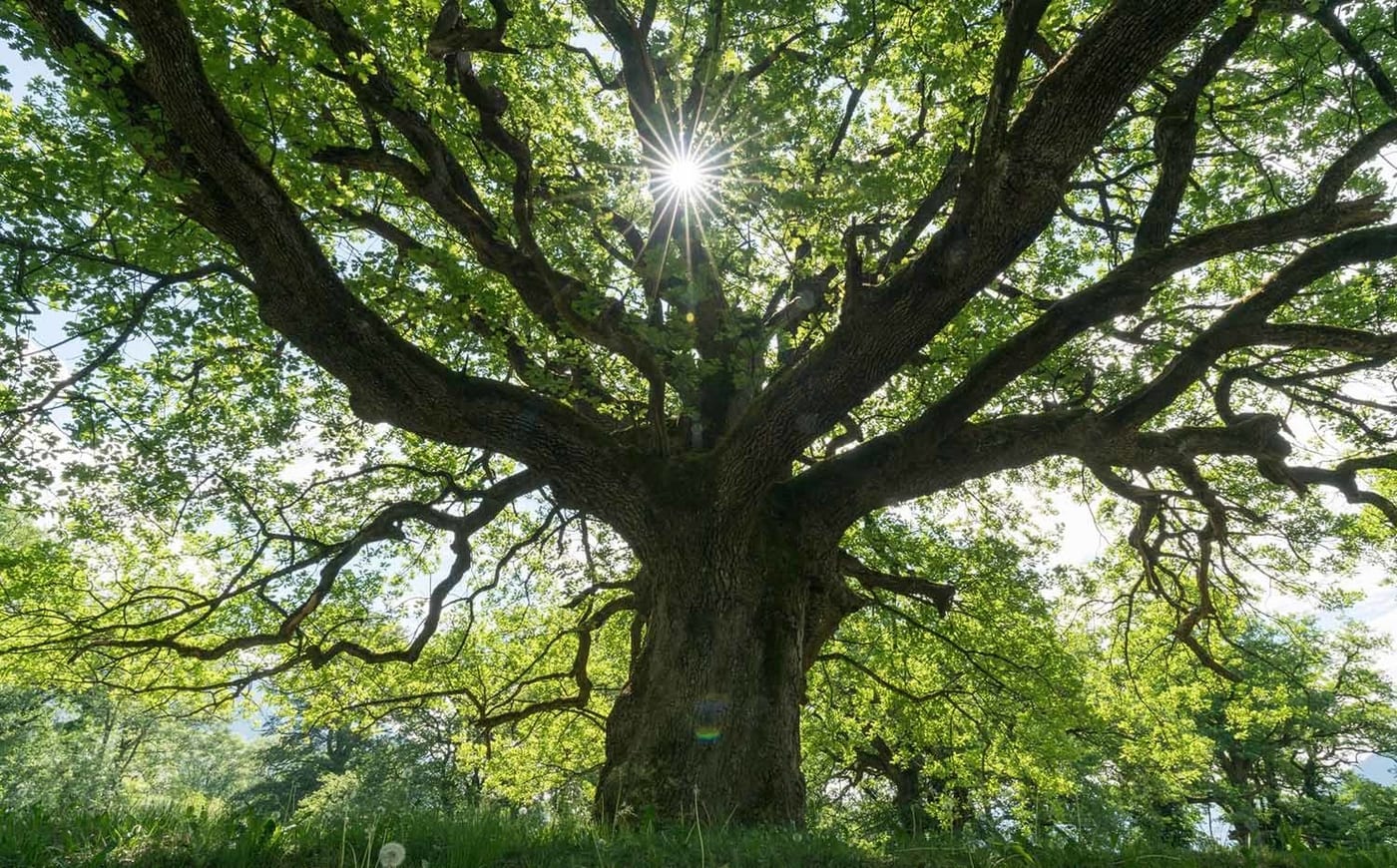
One of the most common follow-up questions we get after a removal: "What about the roots?" Stump grinding removes the visible stump and the largest structural roots radiating out from it, typically to a depth of 12 to 18 inches. The deeper sinker roots and the smaller absorbing roots are left in the soil. They are not going to keep growing — once the tree is cut down, the roots stop producing new growth — but they are also not going to disappear overnight.
What actually happens is decay. Over the next five to fifteen years, the remaining roots in the soil break down through fungal action. During the first three to five years, the soil over former root zones can settle as the roots decompose, leaving small depressions in the lawn that need to be top-dressed. Some species — particularly cottonwood, willow, and hackberry — also produce sucker shoots from cut roots for one to several years after removal. These are usually easy to manage by mowing or by single targeted herbicide applications.
For replanting, the rule of thumb is to choose a different spot rather than dropping a new tree directly into the old root cavity. Soil compaction, residual decay, and stump grinding debris make the immediate spot a poor planting site for at least three to five years. Pick a location appropriate for the new tree's mature size, far enough from the structure to avoid repeating the original problem.
Where We See Root Issues Most Often in Wichita
The pattern is fairly predictable across the metro. We see the most concentrated root-damage situations in:
- Older central Wichita neighborhoods — College Hill, Riverside, Crown Heights, Delano, parts of Eastborough — where homes built before 1960 commonly have foundation walls of poured concrete or block sitting close to silver maples and elms planted decades ago.
- Older Park City lots where mid-century cottonwoods and silver maples were planted close to ranch-style homes that are now seeing drainage and foundation issues. We work this part of the metro most days — our home base is on East 61st Street North in Park City — and our Park City tree removal page covers the local landscape in more detail.
- 1970s-1990s subdivisions in west Wichita, Maize, and Goddard, where green ash and silver maple were the standard developer trees and were almost always planted closer to foundations than current best practice would recommend.
- Older neighborhoods in surrounding communities — Derby, Andover, Newton, Valley Center, Goddard, El Dorado, Augusta — where the same patterns hold and the soil is the same heavy south-central-Kansas clay.
If your home is in any of these settings, root concerns are reasonable to take seriously. They are also frequently solvable without removing the tree. The wrong move is the one made in either direction without a careful look at what is actually happening.
The Cost Math
One way to think about the decision is to put real numbers next to the options. In rough Wichita-market terms:
- Selective root pruning with a root barrier: typically $400 to $1,200 depending on the length of the barrier and accessibility.
- Drainage and grading corrections: $300 to $3,000+ depending on whether French drains or significant regrading are needed.
- Sewer line repair (replacing a compromised section with PVC): typically $1,500 to $7,000.
- Crown reduction to lower water demand: $400 to $1,500 depending on tree size.
- Tree removal for a mature shade tree near a structure: typically $700 to $2,500+ depending on size and access. Our cost guide covers the variables.
- Stump grinding after removal: typically $150 to $500 depending on stump size.
- Foundation repair (piers, wall stabilization): commonly $5,000 to $30,000+ for serious work.
The math usually argues for the least-irreversible intervention that actually addresses the cause. Removing a tree that was not the real problem does not fix the foundation. Repairing a foundation while leaving an aggressive tree in place often means doing it again in five to ten years. The right sequence is diagnose, intervene at the lowest reasonable level, then escalate if the problem continues.
"Most of the time when somebody calls me thinking they need to take down a tree because of their foundation, the right answer is more nuanced than yes or no. We will look at the species, the soil, the slope, the drainage, the type of crack, and what is going on with the rest of the tree. Sometimes the tree has to come down. Sometimes the foundation crack has nothing to do with the tree. Telling the difference is most of the job."
— Joe Kohnen, Owner, Kohnen's Tree Service
When in Doubt, Get an On-Site Look
This kind of decision genuinely is not solvable from a phone description or a photo. The species, the distance to the structure, the type of foundation, the soil moisture pattern, the slope of the lot, the position of the downspouts, the age and condition of the underground utilities — all of it matters, and a few minutes walking the property tells more than an hour of conversation.
Kohnen's Tree Service is family-owned, fully insured, and licensed for tree work in Kansas. Owner Joe Kohnen does in-person assessments throughout the Wichita metro and within a roughly 40-mile radius — including Park City, Derby, Andover, Goddard, Maize, Valley Center, and Newton. Estimates are free, in-person, and there is no pressure to do anything that does not actually need to be done. If the right answer is to leave the tree alone and fix the gutters, we will tell you.
Request your free in-person assessment online, or call (316) 207-4740 any time. We respond the same day, and if removal is the right answer we typically schedule the work within a few days of the estimate.