Plant Health
Carein Wichita, KS
Treatment programs that keep Wichita trees out of the removal queue — bagworm control, chlorosis correction, emerald ash borer protection, and root-zone feeding, each prescribed by an ISA Certified Arborist.
Treatment for Trees Worth Saving
The tree problems we see across Wichita usually start small: a juniper quietly stripped by bagworms, a pin oak's leaves fading toward yellow, an ash thinning at the crown. Caught at that stage, they're treatable. Ignored for two or three seasons, they become removals.
Plant health care is the treatment side of our work. Owner Joe Kohnen — an ISA Certified Arborist — diagnoses the problem first, then prescribes only what the tree actually needs. No blanket spray packages, no treatments that can't change the outcome.
What We
Treat
Five core programs cover the problems that do the most damage to trees in south-central Kansas.
Bagworm Spraying
Bagworms strip junipers, cedars, and spruces fast — and evergreens don't regrow what they lose. Spraying works best in early summer while the larvae are still small, so the treatment window matters more than the product. We treat when it counts.
Iron Chlorosis Treatment
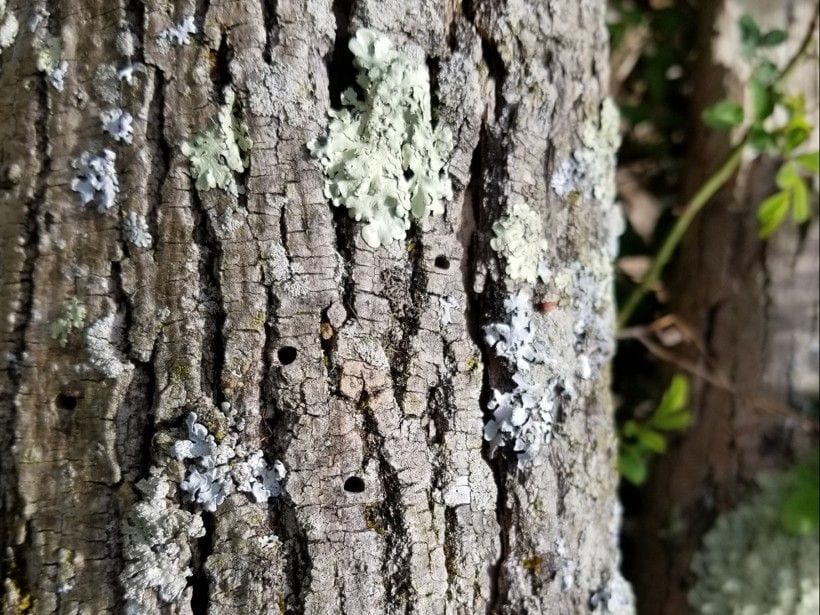
The classic Kansas pattern: leaves fading yellow while the veins stay green, most often on pin oaks and river birches in our alkaline soil. Chelated iron — applied to the foliage or injected at the trunk — puts back what the soil chemistry locks away.
Emerald Ash Borer Treatment
For a healthy, well-placed ash, preventative trunk injections on a two-year cycle can keep EAB from ever taking hold. For a tree already showing decline, the honest question is whether treatment still makes sense — we evaluate the canopy before recommending either path. Our treat-or-remove guide walks through the decision.
Deep Root Feeding
Urban trees grow in compacted, nutrient-poor soil nothing in nature prepared them for. Deep root feeding places slow-release nutrients down in the root zone — below the turf that intercepts surface fertilizer — to rebuild vigor in stressed, storm-damaged, or newly established trees.
Tree Risk Assessment
Not every health question is about pests. If a mature tree leans over the house, dropped a major limb, or just looks wrong, Joe evaluates its structure and failure risk as part of our certified arborist services.
2–3 Years
of protection from a single arborist-applied EAB trunk injection
When Treatments Work
in Kansas
Every one of these programs has a window. Miss it, and you're paying for a treatment the biology won't honor.
Late May – June
Bagworm spraying, while larvae are small and still feeding. By the time the bags seal up in late summer, spraying accomplishes almost nothing.
Spring
Emerald ash borer trunk injections, as ash trees leaf out and sap flow carries the treatment through the canopy.
Spring – Early Summer
Chelated iron for chlorosis, applied before summer heat compounds the stress on an already-deficient tree.
Spring & Fall
Deep root feeding, timed to the seasons when Kansas trees are actively growing roots and can actually use the nutrients.
 Arborist-Prescribed
Treatment Plans
Diagnosis Before
Any Treatment
Plenty of companies will sell you an annual spray package sight unseen. We won't. Every plant health care program here starts with a certified arborist identifying the species, the stressor, and whether treatment can genuinely change the tree's trajectory.
Inspect
Species, site, soil, symptoms — the full picture before any product gets chosen.
Prescribe
A treatment matched to the actual problem and the Kansas calendar — nothing more.
Follow Through
We track how the tree responds and adjust. If it stops being a treatment candidate, you hear it from us first.
Kohnen's Tree Service is an outstanding choice for anyone needing professional tree care in Wichita and the surrounding areas. Their team is highly skilled, responsive, and genuinely passionate about their work. I was particularly impressed by their attention to safety, professionalism, and the thorough consultation they provided before starting any work.
Plant Health
Care FAQ
Wondering about a specific tree? Call (316) 207-4740 — describing the symptoms takes two minutes.
Early summer — typically late May into June — while the larvae are small enough for treatment to work. By August the bags are sealed and spraying accomplishes little; at that point, hand-removal and a plan for next season is the honest recommendation.
Leaves turn pale yellow while the veins stay green, often starting in one section of the canopy. Pin oaks and river birches are the usual victims in our alkaline soils. We confirm the diagnosis in person before recommending chelated iron, because other stressors can mimic the same look.
For a healthy ash in a spot you care about, usually yes — a two-year injection cycle costs far less over a decade than removal and replanting. For a tree that has already lost a big share of its canopy, usually no. We assess the tree before we ever recommend injecting it.
It places slow-release nutrients several inches down in the root zone, bypassing the turf that intercepts most surface fertilizer. It's most useful for stressed, storm-damaged, or newly transplanted trees rebuilding their root systems — not something every healthy tree needs, and we'll tell you which yours is.
It depends on the tree's size and the treatment it needs, so we quote each program individually after a free on-site assessment. You'll have exact numbers before anything is scheduled — and if treatment isn't worth your money, we'll say so and save you the bill.
Once a tree has lost a large share of its canopy or shows structural failure, treatment rarely brings it back — at that point removal is usually the safer spend. Caught early, the odds flip. That's why the free assessment matters: it tells you which side of the line your tree is on.
Assessments, yes — treatments, no. Each one has a Kansas window where it actually works: bagworm spraying in late May and June, chlorosis and EAB treatments in spring into early summer, deep root feeding in spring and fall. Calling outside the window isn't wasted, though; we diagnose now and schedule the treatment for when it counts.
Plant Health Care
Across Greater Wichita
Treatment routes run wherever our trucks do — plant health care for trees in Wichita and every community within a 40-mile radius. If a tree you care about is fading, call (316) 207-4740 before another season slips by.
A Fading Tree Won't Wait.
Neither Should You.
Free on-site assessment by an ISA Certified Arborist — find out what's wrong and whether it's fixable.
Can't call right now? Request a callback
Why Call Now?
- Treatment windows are seasonal — timing matters
- Every plan is prescribed by an ISA Certified Arborist
- Free assessment with exact numbers before scheduling
- If treatment won't help, we say so — no wasted spend
Free estimates • No obligation