A tree can look rough and still be worth keeping. Another can carry a full green canopy while a cracked trunk or failing root system makes it a poor candidate for more trimming. That is why the decision between tree trimming and tree removal in Wichita should not start with appearance alone. It starts with one practical question: Can the specific problem be corrected while leaving a structurally sound tree behind?
If the answer is yes, thoughtful pruning can remove defective branches, improve clearance, and preserve a valuable mature tree. If the problem is in the main trunk, major roots, or the tree's overall decline — especially when a house, driveway, play area, or power line is within reach — removal may be the safer long-term choice. This guide shows Wichita homeowners what to look at before making that call and where a ground-level inspection stops being enough.
The Short Answer: Trim a Correctable Branch Problem; Remove an Unacceptable Whole-Tree Risk
Tree trimming is usually the better option when the tree is alive, reasonably vigorous, and structurally sound, but has a limited problem such as deadwood, rubbing limbs, storm-broken branches, or clearance over a roof or driveway. Removal becomes the stronger option when the entire tree is dead or in irreversible decline, the main trunk or root plate is failing, storm damage has destroyed its usable structure, or no reasonable pruning plan can bring the risk down to an acceptable level.
The International Society of Arboriculture's guidance on managing tree hazards and risk makes the same important point: removal is only one possible response. Depending on the tree and its surroundings, an arborist may recommend pruning a defective branch, moving a movable target, adding support, providing routine care, or removing the tree. A trustworthy assessment compares those choices instead of assuming every imperfect tree must come down.
Five Things That Decide Between Pruning and Removal
1. Is the Problem in a Branch, the Trunk, or the Roots?
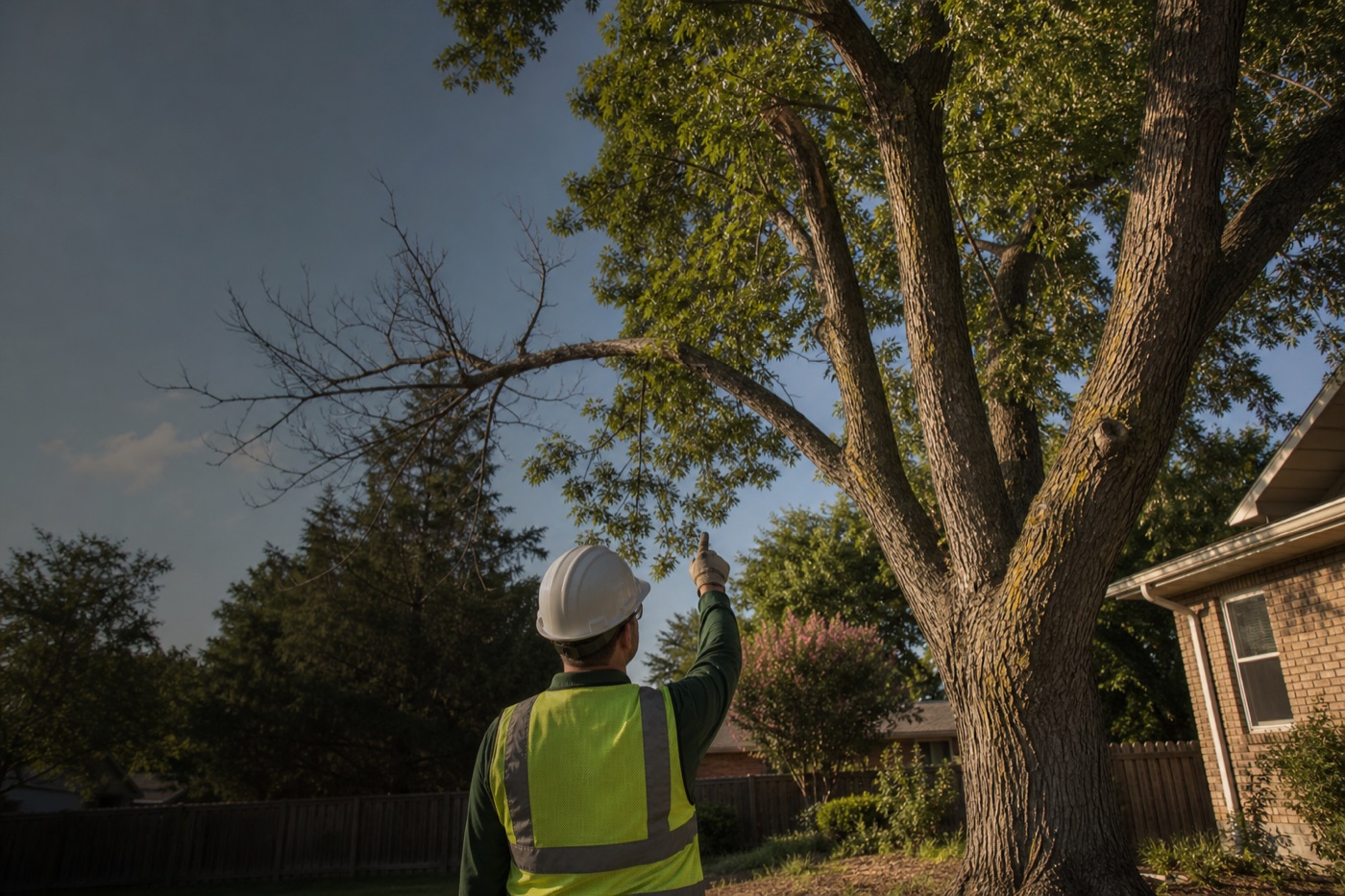
Location matters. An isolated dead or cracked branch can often be removed back to a suitable union while the rest of the tree remains intact. Crossing branches, low limbs over a sidewalk, and a limited amount of storm damage also tend to be pruning problems.
Defects in the tree's load-bearing system deserve more caution. A widening crack between co-dominant trunks, a split through the main stem, extensive decay at the base, recently lifted soil, severed structural roots, or a new lean after a storm may affect the stability of the whole tree. Pruning can reduce some canopy weight, but it cannot rebuild a failed root plate or restore sound wood inside a severely decayed trunk.
2. How Much Healthy Canopy Is Left?
A healthy canopy with one dead limb tells a very different story from a tree with widespread dieback. Look for whether leaves are distributed across the crown, whether decline is limited to one branch, and whether the tree has continued to put on normal growth. Large dead sections, repeated branch loss, or a crown that keeps thinning from year to year can point to a larger root, vascular, pest, or decay problem that trimming alone will not solve.
Storm damage also needs context. In its 2026 guidance on whether storm-damaged trees can be saved, K-State Research and Extension notes that a tree with less than half of its overall structure damaged can often recover with proper pruning and care. That is a useful screening guide, not an automatic pass: a single split main trunk or failed root system can matter more than a canopy percentage.
3. Is There a Target Within Reach?
Tree risk is not just about a defect. It is also about what the tree or branch could hit. A declining limb over an unused corner of a large yard presents a different consequence than the same limb over a bedroom, parking space, public sidewalk, or children's play area. In arboriculture, those people and objects are called targets.
Sometimes risk can be reduced without removing the tree: move a picnic table, stop parking beneath a defective limb, or prune the branch that reaches over the target. A home cannot be moved, though, and repeatedly cutting back a tree that has outgrown a tight site may create an endless maintenance cycle. When a serious whole-tree defect is paired with a high-value target, removal becomes much more likely.
4. Can Pruning Leave a Natural, Stable Crown?
A good pruning plan has a clear objective and leaves enough well-placed live branches for the tree to function normally. That might mean removing deadwood, shortening an overextended limb back to a suitable lateral branch, improving clearance, or correcting a young tree's structure over time. Our Wichita tree trimming checklist explains the basic limits and cut placement homeowners should understand.
If the proposed work would leave only stubs, strip away much of the live crown, or require topping the tree every few years, it is not a sound preservation plan. Topping can trigger weakly attached shoots, stress, and decay; it does not turn an unsuitable or structurally compromised tree into a safe one. When proper reduction cannot create adequate clearance without ruining the crown, removal and replacement with a better-sized species may be the more responsible option.
5. Is the Tree's Condition Stable or Changing?
A long-standing lean can be part of how a tree grew. A new lean after high wind, especially with fresh soil cracks or lifting at the base, is a different situation. The same distinction applies to cavities and old pruning wounds: some remain stable for years, while others show expanding decay, new fungal fruiting bodies, cracking, or repeated failures.
Take dated photos from the same angle and note when symptoms appeared. Change over time is valuable information for an arborist. If movement, cracking, hanging branches, or root-plate lifting is happening now, keep people away from the area and arrange an urgent assessment rather than waiting to compare photos.
Six Common Wichita Scenarios and the Likely Starting Point
- One dead limb over an otherwise healthy yard: Usually a pruning call. Remove the defective limb with a proper branch-collar cut and inspect the rest of the crown for the cause of dieback.
- Healthy branches rubbing the roof or blocking the driveway: Usually a clearance-pruning or reduction call. The objective is to create space while preserving a natural crown, not cut every branch back to the trunk.
- Several broken branches after a Kansas storm: Often salvageable when the trunk, main unions, and roots remain sound and enough live crown is intact. K-State recommends removing broken branches properly and having extensive damage evaluated by a certified, insured arborist.
- A fresh trunk split, new lean, or lifted soil at the base: Urgent professional assessment, with removal a real possibility. These signs can involve the tree's primary support system. Keep people and vehicles out of the potential fall area.
- A dead or steadily declining tree near a structure: Usually a removal call. Pruning dead branches may reduce an immediate symptom, but it does not reverse whole-tree death. See the full guide to dead tree removal in Wichita.
- Branches contacting or close to electrical lines: Do not treat this as ordinary trimming. Evergy tells customers to keep themselves and their tools at least 20 feet from overhead lines and not to cut, trim, or climb trees near them. Keep away and contact the utility's tree-trimming team.
Warning Signs That Push the Decision Toward Removal
No single symptom makes the decision from a webpage. The following combinations do justify a prompt on-site assessment, especially when the tree can reach a home, street, or occupied area:
- The tree is dead, or most of the crown is dead and decline is continuing.
- The main trunk is split, a major union is actively opening, or a large crack has appeared.
- Fresh soil cracking, root-plate lifting, or a new lean appeared after wind or saturated soil.
- Decay is extensive at the trunk base or a primary union, particularly with mushrooms, cavities, or loose bark around the same area.
- Major structural roots were cut during construction or trenching and stability is uncertain.
- Storm loss destroyed the tree's form, leaving too little sound crown for a balanced recovery.
- The tree repeatedly drops substantial limbs despite appropriate care.
- Required clearance cannot be achieved through proper reduction without topping or severely disfiguring the tree.
If you are seeing one of these signs, compare it with our broader guide to the warning signs that a tree may need removal. A photograph can help describe the problem, but trunk decay, root condition, load, and likely fall path often require an in-person view.
Signs That Support Pruning and Preservation
Keeping a mature tree is often the right answer when the defect is limited and the remaining structure is sound. Pruning is more likely to be appropriate when:
- Most of the canopy is alive and the tree shows normal seasonal growth.
- Dead, broken, rubbing, or overextended branches can be removed selectively.
- The trunk has no major active split and the root plate appears stable.
- Clearance can be created with reduction cuts to suitable lateral branches.
- The tree is well matched to the site and will not require repeated severe pruning.
- A qualified assessment finds that pruning or another mitigation can reduce the identified risk to an acceptable level.
Professional tree pruning in Wichita should be objective-based: the estimate should identify which limbs are being removed or shortened and what that work is meant to accomplish. Be cautious of vague plans to “take the top out,” “round it over,” or remove a large share of the crown without explaining how the remaining structure will function.
What a Save-or-Remove Assessment Should Cover
A useful assessment is not a glance at the leaves followed by a sales pitch. It should connect the tree's condition to the property around it and compare realistic options. Expect the evaluation to cover:
- Species and history: what kind of tree it is, known failures, storm or construction damage, and whether the condition is changing.
- Crown: live-crown distribution, deadwood, broken or overextended limbs, weak attachments, and previous pruning.
- Trunk and unions: cracks, cavities, decay indicators, included bark, old wounds, and whether further inspection is needed.
- Root zone: soil movement, root flare condition, severed roots, grade changes, compaction, and recent trenching.
- Targets and consequences: homes, vehicles, sidewalks, neighboring property, utility lines, and how often people occupy the area.
- Options: monitor, prune, reduce, move a movable target, provide support or care, or remove and replace the tree.
Kohnen's ISA Certified Arborist service includes tree-health and risk assessments as part of a free in-person estimate. The goal is a clear recommendation based on the individual tree, not a rule that trimming always saves it or removal is always safest.
Frequently Asked Questions
How can I tell if my tree needs pruning or removal? Start with the location and scale of the problem. A healthy tree with isolated dead, broken, crossing, or clearance branches is usually a pruning candidate. A dead tree, failed root plate, severely split trunk, or tree with unacceptable risk that cannot be reduced through proper pruning is a removal candidate. The final decision may require an in-person assessment.
Can trimming save a dying tree? Trimming can remove dead or defective limbs and may reduce stress in a specific situation, but it cannot reverse whole-tree death, rebuild major roots, or replace sound wood in a severely decayed trunk. The cause of decline has to be diagnosed before pruning is prescribed.
Does a leaning tree always need to be removed? No. A tree that developed a stable lean while growing may be sound. A new or increasing lean, especially with fresh cracks or lifted soil around the roots, is an urgent warning sign and should be evaluated promptly.
How much storm damage is too much? There is no percentage that decides every case. K-State notes that trees with less than 50% overall damage can often recover with proper care, but damage to the main trunk, root system, or critical unions can outweigh that rule of thumb. The amount and location of damage both matter.
Can topping avoid removing a tree that is too large? No. Topping leaves large wounds and weak regrowth and can increase future risk. Proper crown reduction may create needed clearance in some trees. If the tree cannot fit the site without repeated severe cutting, removal and replacement may be the better long-term plan.
What should I do if the tree is near power lines? Stay away and contact the utility. Do not attempt the work yourself. Evergy's outdoor electrical-safety guidance says to keep yourself and all tools at least 20 feet from overhead power lines and not to cut, trim, or climb trees near them.
Get the Right Answer for the Tree, Not Just the Fastest Answer
The best outcome is not automatically the least expensive trimming proposal or the fastest removal. It is the option that leaves your Wichita property with an acceptable level of risk and a tree worth retaining — or clears the way for a better replacement when the existing tree cannot meet that standard.
If you are deciding between tree trimming and tree removal, call Kohnen's Tree Service at (316) 207-4740 or request a free in-person estimate. Bring any photos or notes showing when the problem began; they can help distinguish a stable condition from one that is changing.