Dead & Hazardous
Tree Removalin Wichita, KS
Dead, split, leaning, and over-the-roof trees taken down in controlled, rigged sections. Assessed in person by an ISA Certified Arborist, priced in writing, and cleaned up completely.
When others pass, give us a call.
— Joe Kohnen, Owner & Lead Climber
If it's sketchy, we want it.
What Makes a Tree Hazardous
A tree becomes a hazard when a defect meets a target. A cracked trunk at the back of a big lot is a problem to watch. The same crack over a bedroom, a driveway, a play set, or the service line to your house is a removal that shouldn't wait for the next storm.
So every hazardous removal starts with an in-person look from owner Joe Kohnen, an ISA Certified Arborist (credential MW-389993A). He checks what is failing and how far it has gone, which way the tree wants to fall, and everything underneath it. Then he gives you an honest call — sometimes that's removal, and sometimes pruning out the bad wood makes the tree safe.
Dead trees deserve special urgency. Each season a dead tree stands, its wood dries out, gets more brittle, and rots from the inside. A freshly dead tree can usually still be climbed and rigged with confidence. One that has been dead for years often can't — which makes the job slower, riskier, and more expensive. Wichita's straight-line winds don't help: brittle dead limbs are the first things to come down. Read more in why a dead tree is a growing liability.
Hazardous Trees
We Remove
These are the trees other companies often decline. They are the jobs we built our crew, rigging, and equipment around.
Dead & Dying Trees
Bare crowns, brittle twigs, and bark sloughing off the trunk. Dead wood breaks without warning, especially in wind.
Ash Killed by EAB
Emerald ash borer has been killing ash across the metro, and infested ash turns brittle fast. See treat or remove?
Split & Cracked Trunks
Storm splits, open seams, and weak V-shaped unions — common in Bradford pears and silver maples — rarely heal into safe wood.
Leaning Trees
A lean that is getting worse, especially with soil heaving or cracking on the far side, means the root plate is letting go.
Over Roofs & Garages
Big limbs over the house, garage, or a neighbor's yard come down on ropes, one controlled piece at a time.
Near Service Lines
Trees crowding the lines to your house are planned around the wires. If a tree is touching a line, Evergy has to make it safe first.
Hollow & Decayed Trees
Cavities, mushrooms at the base, and soft wood mean the trunk has less holding strength than it looks.
Pines Killed by Pine Wilt
K-State's guidance is to take infected pines down by April 1. Read pine wilt in Kansas.
How a Hazardous Tree
Removal Works
Nothing gets dropped and hoped for. Every piece of a compromised tree is planned, cut, and lowered under control.
Risk Assessment
Joe checks the defect, the lean, the decay, and every target in the fall zone, then explains the plan and gives you a written price.
Rigging Plan
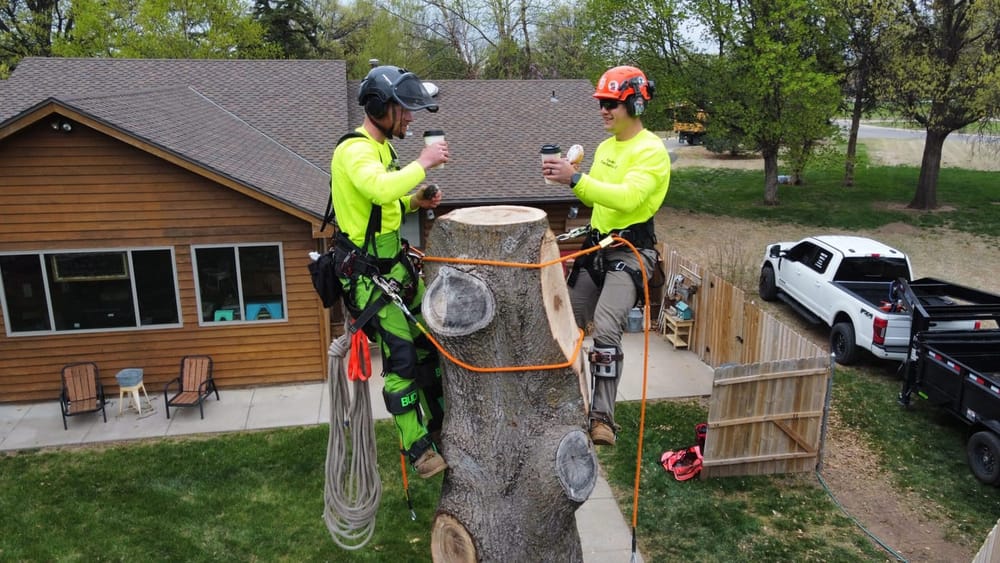
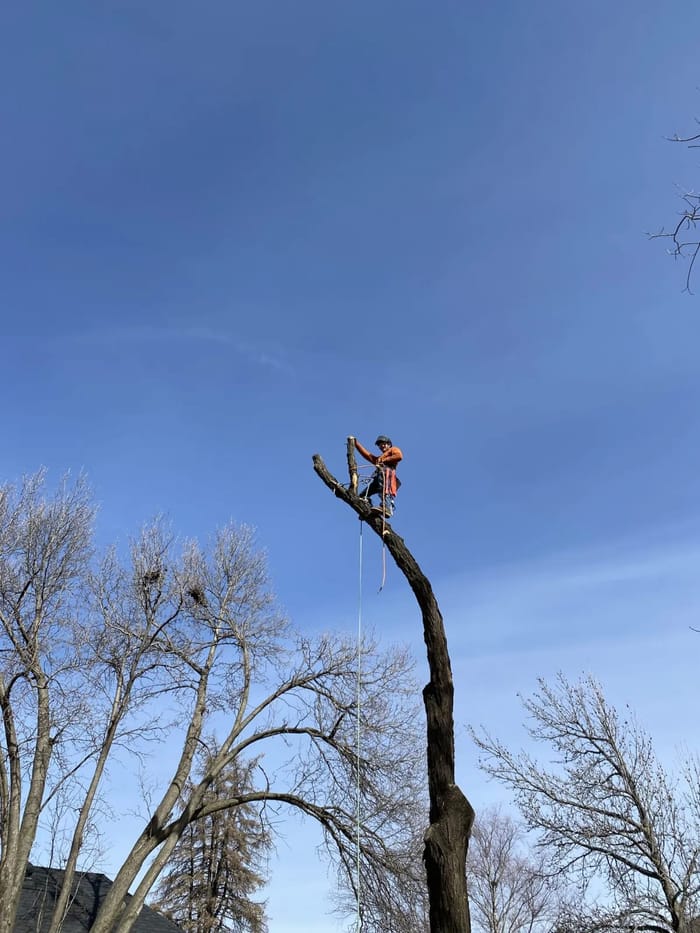
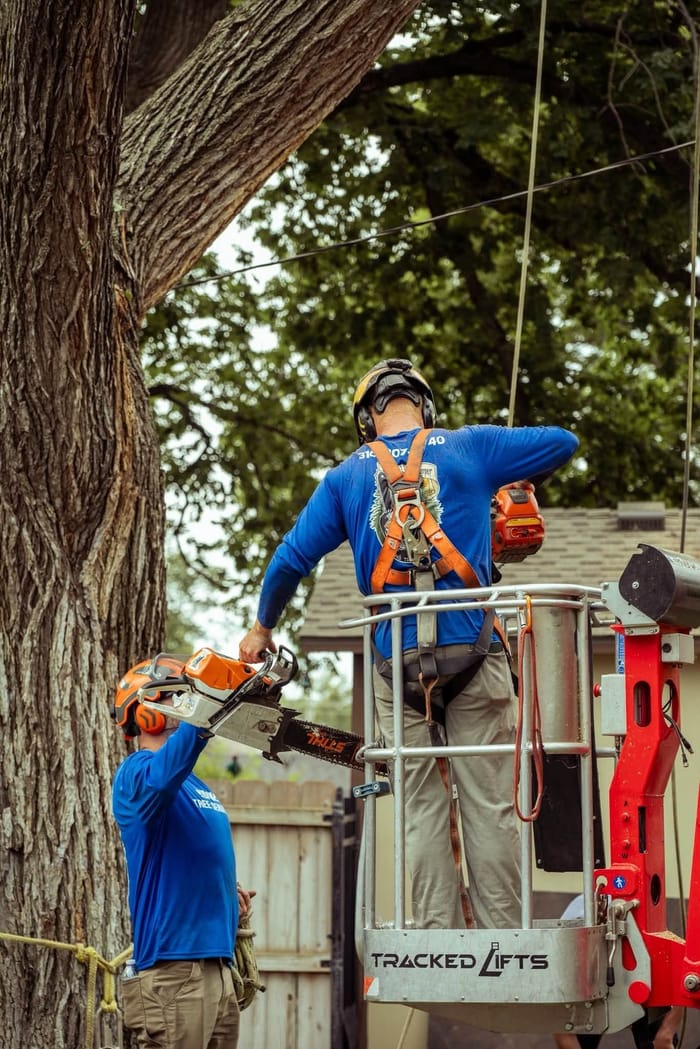
Sound trees get climbed. Dead or rotten wood that can't hold a climber is worked from a bucket truck or lift where access allows, with ropes setting where every piece lands.
Sectional Takedown
The crown comes down first, then the trunk in sections, lowered away from your roof, fence, and lines in a deliberate order.
Cleanup & Stump
Brush and wood are hauled off, and the stump can be ground below grade in the same visit.
What Hazardous Tree Removal Costs — and Why Waiting Costs More
Most whole-tree removals in the Wichita area fall between $300 and $3,000, and hazardous trees tend to sit toward the upper end of their size range. Extra rigging, a lift or bucket truck, and slower cutting around a roof or line all take time. Our tree removal cost guide breaks the numbers down by size. Your exact price comes from a free, written, in-person estimate.
The cheapest time to remove a hazardous tree is now. A dead tree only gets more brittle and more rotten, so next year's job is harder. And if it fails, the cleanup is an emergency on the storm's schedule instead of yours.
Homeowners insurance generally pays for removal only after a tree damages a covered structure — not to take a dangerous tree down before it falls. If you know a tree is dead or dangerous and it lands on a neighbor's house or injures someone, you can be held negligent. Inside Wichita, the city can also declare a dead, broken, or dangerous tree a public nuisance under Municipal Code Chapter 9.08 and order the owner to remove it. Our guide to neighbor tree laws in Kansas covers who pays when.
Hazardous Removals,
In Customers’ Words
"I'll never use another tree service! Joe killed the backyard for us. He took down an old cottonwood tree with ease that had overhead lines going to the house within feet of the trunk. He also pruned the walnut tree that had some limbs hanging over the lines as well. Hard working honest young man. My yard was cleaner after the project than it was before!!!"
 Colter Thoma
Google Review
Colter Thoma
Google Review
"Kohnen's Tree Service is amazing. We had an emergency situation where a tree needed to be cut down ASAP or else the house was going to be damaged. This tree service dropped literally everything and arrived within 30 minutes of us calling them. They were professional and calm during a tense situation and were able to cut the tree down without any damage to the home."
 Michael Bond
Google Review
Michael Bond
Google Review
"Kohnen's did excellent work in removing a damaged mature tree next to our drive. They were careful to prevent damage to the concrete and the cleanup afterwards was excellent. I highly recommend them!"
 Dave Heath
Google Review
Dave Heath
Google Review
Hazardous Tree
Removal FAQ
Worried about a specific tree? Call (316) 207-4740 — we respond same-day.
Watch for dead branches through the crown, deep trunk cracks or cavities, mushrooms at the base, a lean that is getting worse, and soil lifting on the side away from the lean. Any of those over a house, driveway, or play area deserves an in-person look. Our free estimate includes an assessment from an ISA Certified Arborist.
Often, and it gets more expensive the longer it stands. A recently dead tree can usually be climbed and rigged normally. Once the wood is brittle and rotten, the crew has to work from a lift or bucket truck and cut more slowly, which adds time and cost.
Yes — trees crowding the service lines to a house are a regular part of our high-risk work, and we rig every piece away from the wires. If a tree or limb is touching or has brought down a line, stay at least 35 feet back and call Evergy first. Once the line is made safe, we take the tree down.
Generally no. Homeowners policies pay for tree removal after a covered tree damages a structure, not for preventive removal. That's why removing a known hazard early is usually the cheaper path. If a tree has already hit your home, we offer insurance direct billing.
You can be. When a healthy tree falls in a storm, it's usually treated as an act of nature. When a tree the owner knew, or should have known, was dead or dangerous causes damage, the owner can be found negligent. See neighbor tree laws in Kansas for the details.
If you'd like. Stump grinding is an add-on, typically $100–$400 per stump in the Wichita area, and it's most cost-effective done in the same visit as the removal. We grind 4–6 inches below grade so you can replant or reseed.
Hazardous Tree Removal
Across Greater Wichita
We take down dead and dangerous trees throughout Wichita and surrounding communities within a 40-mile radius, from our base in Park City. Pick your town to see the local trees and conditions we work with there, or view every area we serve.
Have a Tree You’re Worried About?
Get a free, in-person assessment and a written price, with same-day response. Fully insured, owner on every job.
Prefer to write? Send us a message