
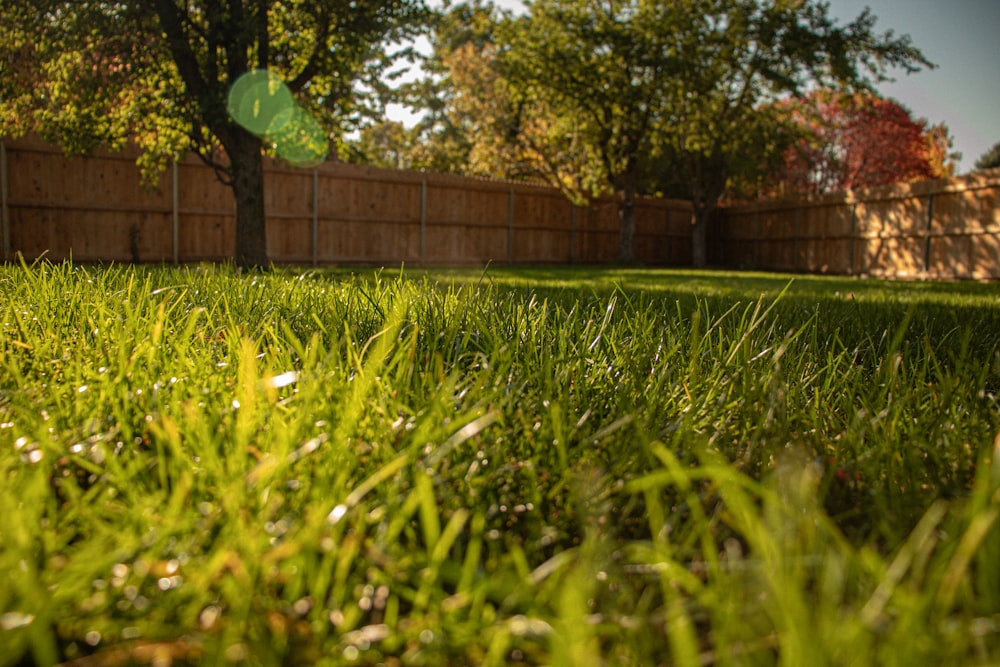
Almost every week, somebody in Wichita calls us about a tree that isn't theirs. A silver maple limb is scraping the shingles from three feet over the fence. Roots are lifting a driveway from the yard next door. A dead elm has been leaning toward a garage for two summers and the owner won't do anything about it. The question is always the same, and it's always asked a little apologetically: am I allowed to touch it, and if it comes down, who pays?
The honest answer is that neighbor's tree laws in Kansas are more settled than most homeowners expect, and the practical rules break down into three separate situations that people tend to blend together: what crosses the line while the tree is standing, who pays when it comes down, and what changes once a tree is visibly dead. Wichita adds a fourth layer, because the city has its own tree ordinance with real teeth — including one provision that saves homeowners money and almost nobody knows about.
This is a plain-English guide from a tree crew, not a law firm. We work property-line trees constantly and we've watched how these situations actually play out in Sedgwick County yards. Nothing here is legal advice, and if real money or a real dispute is on the table, talk to a Kansas attorney. But for the ninety percent of cases that are just a branch, a root, or an awkward conversation, this is what you need to know.
Start With the Only Question That Matters: Whose Tree Is It?
Ownership follows the trunk, not the canopy. If the trunk stands entirely on your neighbor's side of the property line, it is their tree — even if seventy percent of the branches hang over your yard, even if every leaf falls on your lawn, and even if the shade is entirely yours. The reverse is equally true.
There is one important exception. When a trunk straddles the boundary — and mature trees planted along old fence lines do this constantly in Wichita's established neighborhoods — it's generally treated as a boundary tree owned in common by both parties. Neither owner gets to remove it unilaterally. That single fact has stopped more removals in our estimate conversations than any other, and it's worth settling before anyone schedules a crew.
Which brings up the part people get wrong most often: your fence is not necessarily your property line. Fences get built inside the line, outside the line, and occasionally several feet off. If a tree is close enough that the answer matters, the line is worth establishing for real — from your plat, your mortgage survey, or a licensed surveyor — before you make a decision based on where somebody's pickets happen to sit.
Overhanging Branches: What Kansas Actually Lets You Do
Kansas follows what's known as the self-help rule. The Kansas Court of Appeals addressed it directly in Pierce v. Casady (1985), a case involving a 75-foot pecan tree leaning over a neighboring property with roughly three-quarters of its canopy on the wrong side of the line. The court's position, in practical terms:
- You may trim branches that cross onto your property, back to the property line. You don't need permission and you don't need to ask.
- You pay for it. Self-help means exactly that. The cost of trimming an encroaching branch is yours, not your neighbor's.
- You may not enter their land to do it. Everything happens from your side. Reaching over is fine; stepping over without permission is not.
- You may not remove the tree. Trimming what encroaches is one thing. Taking down a tree that isn't yours is another thing entirely.
That last line deserves emphasis, because it is where a bad Saturday turns into a genuinely expensive one. Cutting down or seriously damaging a tree belonging to someone else can be charged under Kansas's criminal damage to property statute (K.S.A. 21-5813), which grades the offense by the dollar value of the damage — a class B misdemeanor under $1,000, and a felony above it. Mature shade trees appraise for a lot more than people assume. "I thought it was mine" is not a defense anybody wants to rely on.
The Part the Law Doesn't Tell You: What Trimming to the Line Does to a Tree
Here's the tension in the self-help rule. Pierce acknowledged that trimming at the property line might effectively destroy the tree, and permitted it anyway. So the law will let you make a cut that an arborist would tell you not to make.
We say that out loud on estimates, because homeowners deserve to know the difference between allowed and advisable. Taking a whole side off a mature tree does three things: it removes a large share of the leaf area the tree feeds itself with, it creates large wounds that decay organisms move into, and it shifts the tree's center of mass toward the side that still has weight on it. A one-sided crown is a tree that leans harder in a Kansas straight-line wind — usually toward the neighbor who didn't do the cutting.
There's a version of this that works. Proper reduction pruning to ANSI A300 standards shortens encroaching limbs back to a lateral branch large enough to take over, spreads the work across a few seasons on a big tree, and keeps the canopy balanced. It costs a bit more than sawing everything flat at an imaginary vertical plane, and it leaves you with a tree that's still standing in five years. It is also not topping, which is what a flush-cut-at-the-line job amounts to when the limbs are big.
Practically, the smartest move is usually the least legalistic one: knock on the door. A shared estimate where both owners see the same plan, and split the invoice, gets a better result for the tree and costs each side less than two separate crews doing half a job each. We write those estimates regularly and they are not awkward.
Roots Under the Fence
Roots follow the same self-help logic as branches — you can generally cut what enters your property, on your side of the line, at your expense. The risk profile is completely different, though, and this is the one place we push back hardest.
Severing structural roots is the fastest way to kill or destabilize a large tree, and unlike a bad pruning cut, you can't see the damage until the tree is failing. A trench dug along a fence line to stop encroaching roots can take out a significant share of the root plate on that side. The tree may look completely normal for two or three years and then go over in a thunderstorm — and at that point, the fact that you cut the roots is very much part of the conversation about who is responsible.
If roots are genuinely damaging something — a sewer lateral, a slab, a driveway — get the problem diagnosed before anybody digs. Our guide to tree roots and foundation damage in Wichita covers what roots really do to structures in our clay soils, which is often less than the internet suggests. Root barriers installed correctly, or a targeted pruning plan from an ISA Certified Arborist, solve most of these without gambling the tree.
Leaves, Acorns, Cotton, and Sap: The Answer Nobody Likes
Leaf litter, acorns, sweetgum balls, cottonwood fluff, sap dripping on a car, and fruit dropping over the fence are considered natural products of a healthy tree. Cleaning them up is your job, on your property, regardless of which side the trunk is on. That is the general rule, and Kansas gives you no separate claim for the raking.
That is genuinely the answer, and we deliver it a dozen times a summer. If the mess is severe enough that you want it to stop, the realistic paths are the same two you started with: prune what overhangs your yard at your own cost, or work out a shared plan with the owner. A grapple truck and debris haul after a big cleanup is a cost worth splitting too, and it's an easier conversation than the tree itself.
When It Actually Comes Down: Who Pays
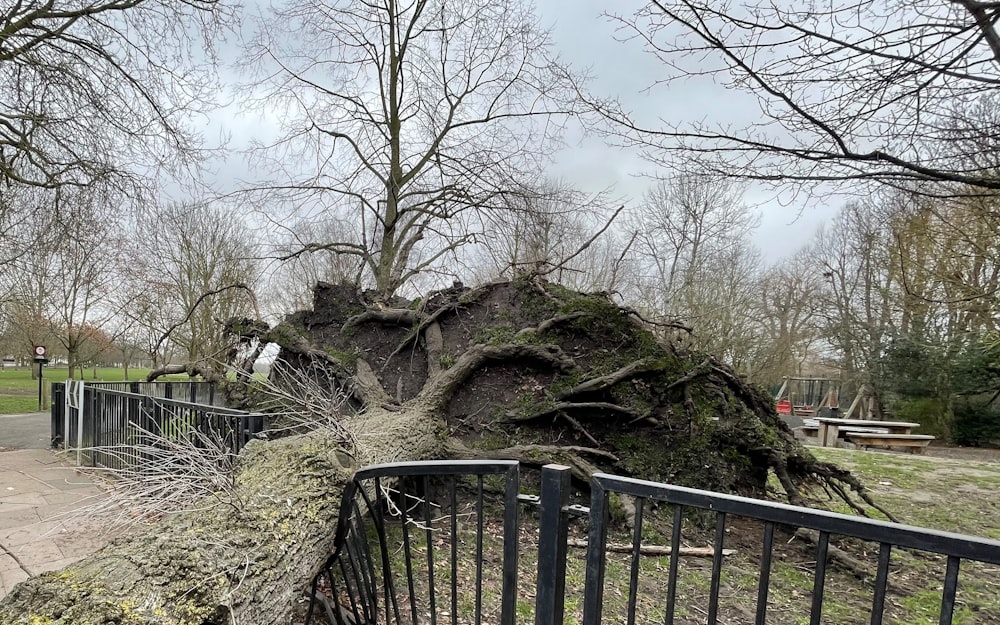
This is the question that brings people to the phone at 6 a.m., and the answer surprises almost everyone.
The Kansas Department of Insurance states that damage from a fallen tree or branch is generally covered by the insurance policy on the damaged property — regardless of who owned the tree. If your neighbor's cottonwood lands on your roof, you file with your carrier and you pay your deductible. Their policy is not the starting point, and calling their agent will not change that.
The reasoning is that a healthy tree failing in a storm is treated as an act of nature. Nobody was negligent, so nobody is liable, and each property's own coverage handles its own damage. Our full breakdown of insurance coverage for storm-damage tree removal in Kansas walks through what's typically covered, what isn't, and how direct billing works.
Two details worth knowing before you file:
- A tree that fell and hit nothing is usually on you. Coverage generally attaches to damage to a covered structure. A trunk lying across an empty lawn is a cleanup expense, not a claim — which is why open-yard falls so often become a straightforward removal and haul-off instead.
- Debris removal is often capped separately. Many policies carry a specific sub-limit for hauling the tree away, distinct from repairing what it hit. Ask about that number early, not after the crew has left.
The Exception That Changes Everything: A Tree That Was Already Dead
Everything above assumes a healthy tree. Once a tree is visibly dead, diseased, or obviously hazardous, the analysis flips — because the owner is now considered to be on notice of a known danger. If a tree in that condition fails and damages a neighbor's property, the owner can be found negligent for failing to act on a hazard they knew about, or should have known about.
"Should have known" is doing real work in that sentence. A dead ash with no leaves in July, a trunk split open, mushrooms bracketing out of the base, a fresh lean with soil heaving on the opposite side — these are not subtle. Our guide to dead tree removal in Wichita covers how to tell a dead tree from a dormant one, which matters more than people think in a city that still has a lot of standing ash after emerald ash borer.
This cuts both ways, and it's worth being blunt about it: if the dead tree is yours, the exposure is yours. A known hazard that falls on the neighbor's garage is the one scenario where a removal you keep postponing becomes dramatically more expensive than the removal would have been.
The Paper Trail That Decides the Outcome
If you are worried about a specific tree next door, documentation is the entire ballgame. A verbal mention over the fence proves nothing six months later. What holds up:
- Dated photos. Take them now, from a fixed spot, and take them again each season. A year of photos showing the same dead crown is powerful.
- Written notice, sent so it can be proved. A short, polite, factual letter — what the tree is, what condition you observed, what you're asking for — sent certified mail with return receipt. Keep a copy.
- A professional assessment. A written tree risk assessment from a certified arborist converts "I think it looks bad" into a documented opinion with a date on it. This is the single most useful document in the file.
- A complaint on record with the city. In Wichita, that record exists whether or not the neighbor ever responds to you — which brings us to the ordinance.
Wichita's Tree Ordinance: The Lever Most Homeowners Don't Know They Have
Chapter 9.08 of the Wichita municipal code is the local layer, and it is more direct than most people expect.
The code declares dead, broken, dangerous, diseased, and infested trees to be a public nuisance when they threaten public safety or people and property nearby (9.08.070), and it places an affirmative duty on private property owners to abate that nuisance by treating or removing the tree (9.08.080). This is a city-code obligation that exists whether or not a neighbor ever complains.
When the city acts on it, the timeline is short. An officer serves written notice by personal service or certified mail, and the nuisance must be abated within a period not exceeding fourteen days, with a single ten-day extension available if the owner can show due diligence (9.08.090). The owner has the right to request an informal hearing within ten days if they disagree (9.08.095).
If the deadline passes with nothing done, the city abates it and bills the owner. Unpaid, that cost can be certified to the county and levied as a special assessment against the property on the tax roll, or pursued as a personal debt (9.08.100). That is a meaningfully different outcome from simply ignoring a neighbor's letter, and it's why a call to the city about a genuinely dangerous tree is not an empty gesture.
Used well, this is a de-escalation tool rather than a weapon. A neighbor who has been vaguely meaning to deal with a dead tree tends to move quickly once there's a code timeline attached — and the outcome everybody actually wanted (the tree comes down safely, nobody's roof is involved) arrives without a lawsuit.
The Tree by the Curb May Not Belong to Either of You
Here is the provision worth knowing before you spend a dollar. In Wichita, the cost of planting, maintaining, pruning, removing, and caring for trees in the public right-of-way is the City's responsibility (9.08.001), and the Park and Recreation Department handles that maintenance (9.08.002).
The right-of-way is defined property line to property line, which includes the strip between the curb and the sidewalk where a great many of Wichita's street trees live. If the tree in the dispute is standing in that strip, it may be neither yours nor your neighbor's — and the fix may be a phone call to the city rather than an invoice for anybody.
The flip side is that you can't just take a saw to those trees. It's unlawful to alter a tree in a street, right-of-way, or on public property without the Director's consent (9.08.010). The code carves out narrow exceptions you can do yourself:
- Removing branches under two inches in diameter to maintain seven feet of clearance over sidewalks and 13.5 feet over streets.
- Removing water sprouts and suckers.
- After a storm or freeze, an adjoining property owner may clear broken or damaged branches from the right-of-way without asking first — but removing an entire tree still requires permission, and hauling off the debris is on the property owner (9.08.020).
Anyone who does alter a right-of-way tree is also required to grind the stump, fill the hole, and clear all wood, brush, and debris from the sidewalk and street (9.08.030). If you live outside the city limits — Park City, Bel Aire, Derby, Andover, Maize, Valley Center, or unincorporated Sedgwick County — your local code will differ, so confirm with your own city hall before assuming Wichita's rules apply.
If There's a Wire Anywhere in the Picture, Stop
None of the above applies to a tree touching a power line. That is not a property-line question and it is not a homeowner job on either side of the fence. Call 911 and Evergy at 1-800-383-1183, keep everyone well back, and let the utility de-energize the line before any crew, ours included, goes near it. Kohnen's runs 24/7 emergency tree service across the Wichita metro, and the first thing we do on a wire call is confirm the line is dead.
If a tree has already come through a roof, our step-by-step guide to a fallen tree on your house in Wichita covers the order of operations — safety, documentation, insurer, crew — in the hour after it happens.
How These Jobs Actually Get Done
Once the legal picture is clear, a property-line job is mostly logistics. Six things sort it out on the estimate:
- Establish the line, on site. We walk it with you before quoting anything. If the line genuinely can't be established from a plat or a survey, that gets said out loud rather than guessed at.
- Get written access permission if the work needs it. Rigging a limb that overhangs your yard often means setting ropes from the trunk — on their side. A one-paragraph note from the tree's owner turns a legally messy job into a routine one.
- Agree on the drop zone. The safest place to land wood is frequently the other person's lawn. Settling that in advance prevents the argument that otherwise happens mid-job.
- Split the invoice properly. On a shared or boundary tree, we can quote the work as one job with a clear breakdown, so each owner sees exactly what they're paying for. One mobilization, two line items, half the cost each side.
- Confirm insurance before anyone climbs. Ask for certificates of both general liability and workers' compensation. On a property-line job, a limb that goes somewhere unintended lands on somebody else's house — the coverage question is not theoretical. Our guide to choosing a tree service in Wichita covers what to verify and how.
- Decide who hauls. Wood, brush, and stump grindings have to go somewhere, and "we'll figure it out" is how a clean job ends with a pile on the property line for a month.
"Most of these calls aren't really legal problems. They're two people who each assumed the other one was supposed to handle it. Ninety percent of the time, one honest estimate that both neighbors are standing at ends the whole thing — and it's cheaper than either of them was expecting."
— Joe Kohnen, Owner, Kohnen's Tree Service
Neighbor's Tree Laws in Kansas: The Short Version
- Ownership follows the trunk. A trunk on the line means a shared tree neither side removes alone.
- You may trim encroaching branches and roots back to the line, at your own cost, without entering their property — and you may not remove the tree.
- Trimming flat at the line is legal and frequently a bad idea; proper reduction pruning keeps the tree stable.
- Leaves, acorns, cotton, and sap are your cleanup, whichever side the trunk is on.
- When a healthy tree falls, the policy on the damaged property generally pays — not the tree owner's.
- Once a tree is visibly dead or hazardous, notice changes everything. Document it in writing.
- Wichita declares dangerous and dead trees a public nuisance, gives owners up to 14 days to abate, and can assess the cost against the property.
- Right-of-way trees in Wichita are the City's to maintain — and not yours to cut without consent.
Frequently Asked Questions
Can I cut my neighbor's tree branches that hang over my property in Kansas? Yes, within limits. Kansas follows the self-help rule, confirmed in Pierce v. Casady (1985): you may trim branches that encroach on your property back to the property line, at your own expense, without your neighbor's permission. You may not enter their land to do it, and you may not remove the tree itself.
Who is responsible if my neighbor's tree falls on my house in Kansas? Usually your own homeowners policy. The Kansas Department of Insurance states that damage from a fallen tree or branch is generally covered by the policy on the damaged property, no matter who owned the tree. The exception is a tree that was already dead or visibly hazardous, where the owner may be liable for negligence.
What if the neighbor's tree was already dead before it fell? That changes the analysis. Once a tree is visibly dead, diseased, or clearly hazardous, the owner is generally considered on notice of the danger, and failing to act can be negligence. Documented prior notice — dated photos, a certified-mail letter, a written arborist assessment — is what turns that argument from an opinion into a record.
Who owns a tree growing on the property line? If the trunk straddles the boundary, it is generally a boundary tree owned in common by both property owners. Neither owner can remove it without the other's consent, and both typically share responsibility for its care. Settle this before scheduling any work.
Can I make my neighbor cut down a dangerous tree in Wichita? Not directly, but the city ordinance gives you a path. Wichita's code declares dead, broken, dangerous, diseased, and infested trees a public nuisance and requires private owners to abate them. If an officer serves notice, the owner has up to fourteen days to act, with one ten-day extension available. If they do not, the city can abate it and assess the cost against the property.
Who is responsible for the tree between the sidewalk and the curb in Wichita? The City. Wichita's code makes the cost of planting, maintaining, pruning, and removing trees in the public right-of-way a City responsibility, handled by Park and Recreation. You also cannot alter those trees without the Director's consent — beyond clearing branches under two inches for seven feet of sidewalk clearance and 13.5 feet of street clearance, or removing suckers and water sprouts.
Do I have to clean up my neighbor's leaves and acorns in my yard? In practice, yes — ordinary leaf litter, acorns, cotton, sap, and fruit are treated as natural products of a healthy tree, and cleanup on your property is yours. Your options are to prune what overhangs your yard at your own cost, or to agree on a shared plan with the owner.
What happens if I cut down my neighbor's tree by mistake? It can be serious. Damaging or destroying a tree in which someone else has an interest can be charged under K.S.A. 21-5813, graded by the dollar value of the damage — a class B misdemeanor under $1,000, and a felony above that. Mature trees appraise high. Establish the property line before any saw comes out.
Can a tree crew work on a tree that is on my neighbor's side of the line? Only with the owner's permission. A crew can prune what overhangs your property from your side without it, but anything requiring access, rigging points, or a drop zone on their land needs their sign-off. A brief written note is enough, and getting it in advance is the difference between a routine job and a stalled one.
Sorting Out a Property-Line Tree in the Wichita Area?
Bring us out and we'll tell you plainly what you're looking at: whose tree it is, whether it's actually a hazard or just an inconvenience, what proper pruning would cost versus a full removal, and whether the neighbor needs to be part of the conversation at all. Joe Kohnen is an ISA Certified Arborist and walks the line with you in person. If a written risk assessment would help you document a genuinely dangerous tree next door, we can do that too.
Kohnen's Tree Service is family-owned and owner-operated, fully insured for both general liability and workers' compensation, and rated 4.9 from 130+ Google reviews. We work Wichita and the communities within roughly 40 miles of our Park City base — Bel Aire, Derby, Andover, Goddard, Maize, Newton, Valley Center, and El Dorado included.
Request a free in-person estimate, or call (316) 207-4740. We respond the same day.