
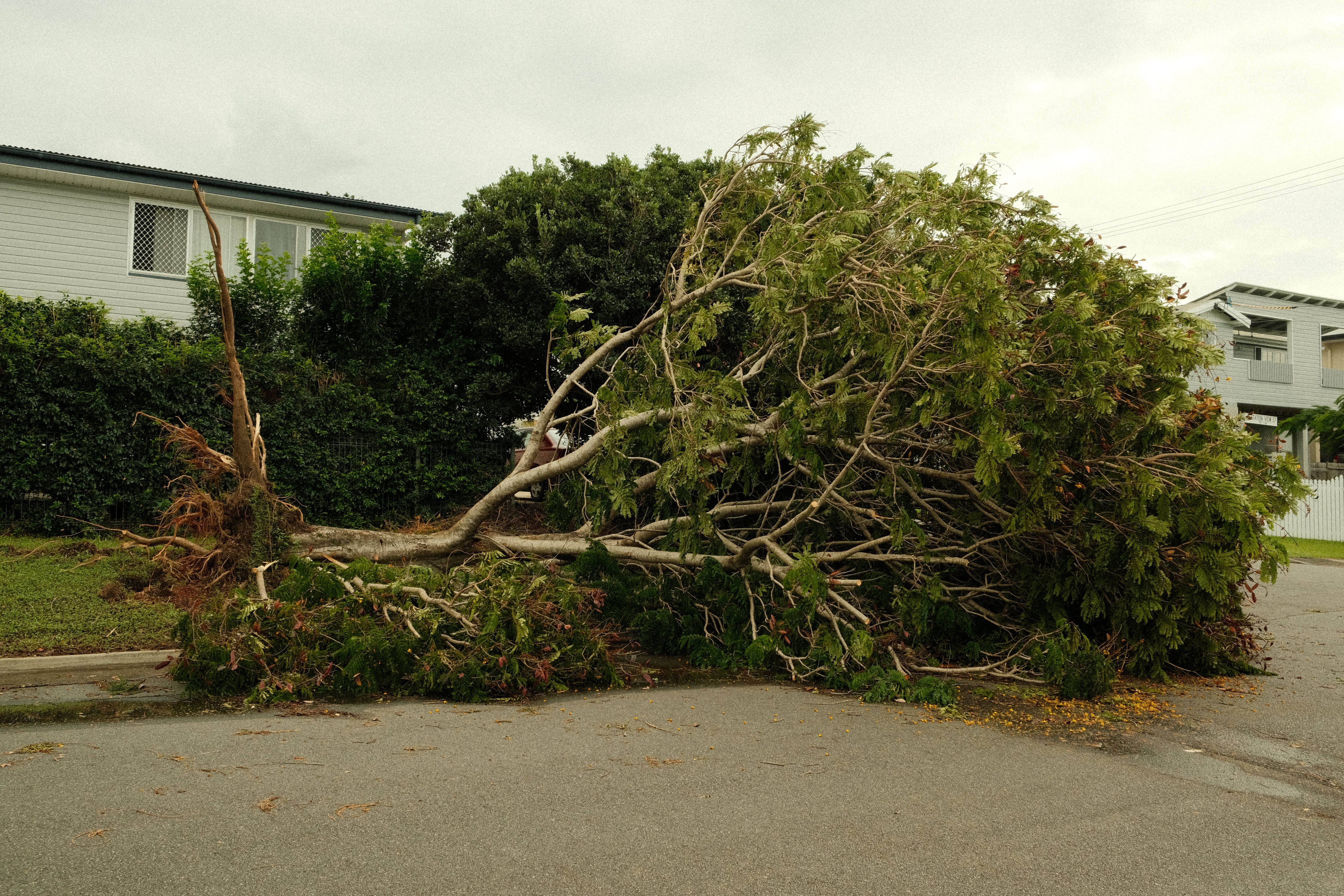
It's 1:40 in the morning, the storm has moved east, and there's a tree where your driveway used to be. You're standing at the window doing math you've never done before: do I call somebody right now, or do I go back to bed and deal with this at seven?
That question is really two questions stacked on top of each other. One is about safety, and it has a firm answer. The other is about money — what the middle-of-the-night call actually costs, and whether waiting six hours saves you anything — and almost nobody explains that part honestly.
This guide is the money half. If you need the safety half first — the fast read on which damage is genuinely dangerous — go straight to our guide on when a storm-damaged tree is a real emergency and come back. Every dollar figure below is a general market estimate for the Wichita area to help you plan, not a posted rate. Nobody can price a storm job from a phone call, which is why the estimate happens on site and is free.
First: Does the Clock Actually Change the Price?
Sometimes. It depends entirely on who you call, and it's the single easiest thing to ask about before anyone gets in a truck.
There are two very different things people mean by "emergency pricing," and conflating them is where homeowners get surprised:
- An after-hours surcharge is a fee tied to the clock — a night, weekend, or holiday premium, or a flat call-out charge just for dispatching outside business hours. Plenty of trades do this. Some tree companies do too.
- An emergency job costing more than a scheduled one is a different thing, and it's about the work itself. A tree lying across a roof at 2 a.m. is harder, slower, and more dangerous than the same tree standing in an open yard at 2 p.m. That's not a fee — it's a genuinely bigger job.
The second one is unavoidable, and it's fair. The first one is a business decision, and it varies. We answer the phone 24/7 and we don't add night, weekend, or holiday surcharges to our emergency response — when a tree is on your house, surprise fees are the last thing you need. Whoever you call, ask this exact question before they roll: "Is there an after-hours or call-out fee, and is it separate from the price of the work?" A straight answer takes four seconds.
What You're Actually Paying For at 2 A.M.
Understanding why a storm job costs what it does makes the estimate legible instead of alarming. Four things drive the number, and only one of them has anything to do with the hour.
1. What the tree is resting on
This is the biggest lever, by far. A tree lying in open grass is a straightforward cutting job. A tree resting on a roof is a controlled disassembly: the crew has to work out what's holding the weight, then cut in an order that doesn't drop the rest of it through your ceiling, rigging pieces off rather than letting them fall. Same tree, very different job. Structures, vehicles, fences, and utility drops each add work and each add risk.
2. Stored tension in the wood
A storm-damaged tree is loaded like a spring. Bent trunks, limbs pinned under other limbs, a canopy holding itself up against a gutter — all of it is under compression and tension that a standing tree never has. Releasing that energy in the wrong order is how people get badly hurt. Sorting it out takes time, and time is most of what you're paying for.
3. Access and equipment
Can a truck get to it, or does everything come out by hand through a side gate? Is the backyard soft enough that a heavy machine would rut it? Does the piece over the garage need a crane rather than ropes? Access decides which equipment gets dispatched, and equipment is the difference between a two-hour job and a full-day one.
4. Working in the dark, in the weather
Here's the honest part about the hour: night work is slower. Everything is lit by portable work lights, hazards are harder to see, the ground is usually still wet, and there may be another cell on the way. A crew won't do at midnight what they'd cheerfully do at noon, and the pace reflects that. It isn't a fee — it's fewer feet of progress per hour.
The Two Kinds of After-Hours Call — and Why the Cheaper One Is Usually Enough
Most people picture one outcome from a night call: a crew shows up and the whole tree is gone by sunrise. That's often not what you need, and it's not the cheapest path.
The make-safe visit. In the trade this is called mitigation, or "making the site safe" — a targeted trip that removes the immediate danger and nothing else. Cut the limb off the roof and get a tarp over the hole. Clear enough of the driveway that a car and an ambulance can get through. Bring down the hanger — a broken limb still lodged up in the canopy — that's poised over the front walk. Everything else waits for daylight.
The full emergency removal. The tree comes down, gets cut up, the debris leaves, and the site is clean. More crew, more hours, more equipment.
Nine times out of ten, a 2 a.m. call needs the first one and can schedule the second for later that week. Splitting the job that way is the most reliable way to spend less on a storm without pretending the danger isn't there. When you call, say so plainly: "I need this made safe tonight and the rest scheduled." Any crew worth hiring will already have been thinking it.
Real Numbers, With Honest Caveats
Here's the orientation most cost pages won't give you. These are general ranges seen around the Wichita metro — educational estimates to help you sanity-check a quote, not our price list.
- A make-safe or stabilization visit sits at the low end of emergency work, because it's scoped tightly. You're paying for a crew, a truck, and a few hours — not a whole removal.
- A full emergency removal typically starts around $750 and climbs from there with size, damage, and complexity. A large tree across a house can run into the several thousands, because the removal has to protect what's left of the structure while the tree comes apart.
- The same tree, scheduled on a clear day, generally lands somewhere in the $300 to $3,000 band that whole-tree removals span around here, driven mostly by height, spread, and what's underneath. That's the comparison that actually matters, and it's broken down in depth in our Wichita tree removal cost guide.
- Add-ons that show up on storm jobs: hauling a large debris volume, crane time when there's no safe drop zone, emergency tarping, and stump grinding afterward. Each is its own line item, and each is worth asking about up front.
The spread inside those ranges isn't vagueness — it's the difference between a 12-inch hackberry lying in the grass and a 40-inch cottonwood folded onto a garage. Diameter, lean, what it's touching, and how a machine reaches it can only be judged in person.
When You Call Now, Whatever It Costs
Some situations aren't a budgeting decision. If any of these is true, the price question comes second:
- Any wire is involved. If the tree took down a line or is touching one, this is not a tree-service call first. Call 911 and Evergy at 1-800-383-1183, treat every downed wire as live, and keep everyone — including you — well back. A tree crew cannot legally or safely touch an energized line.
- A tree or large limb is on the house with people inside. Get everyone out of the affected rooms and call. Whatever caught the tree is holding it, and that support can let go hours later.
- Something is hanging over where people walk or sleep. A detached limb hung up in the canopy comes down without warning, and it does it most often when someone is standing underneath deciding whether it's safe.
- The trunk has a fresh split, or the tree is leaning more than it was. Look at the base: soil mounded, cracked, or lifting on the side opposite the lean means the root plate — the underground pad of soil and structural roots that anchors the tree — is failing right now.
- Your only way out is blocked. Even with no damage, a tree across the drive blocks emergency vehicles and can hide a downed line underneath it.
- You smell gas, or a meter or service line is damaged. Leave, then call the utility from outside.
Waiting through any of those doesn't save money. It converts a removal bill into a potential injury or a much larger insurance claim.
When It's Genuinely Safe to Wait for Morning
And here's the part almost no tree company puts in writing: plenty of storm damage can wait, and waiting is cheaper. If all of the following are true, go back to bed.
- Nothing is touching a structure, a vehicle, or a wire.
- Nothing is hanging over a walkway, a driveway, a patio, or a bedroom.
- The fall zone — the area a leaning or damaged tree would land in — is open lawn, and you can keep people out of it.
- You have another way in and out of the property.
- The failure is finished, not in progress. A limb that already broke clean and fell away is stable. A trunk actively cracking is not.
- No more severe weather is coming in the next few hours.
That covers most of what a Kansas thunderstorm leaves behind: limbs down in the yard, a shredded canopy, a tree that lost a major branch away from everything, deadwood shaken loose.
If you're waiting, spend ten minutes making the wait safe:
- Move vehicles out from under anything damaged, and park on the street if the driveway is questionable.
- Rope off or barricade the fall zone so nobody wanders through it in the morning — kids and dogs especially.
- If a bedroom sits under a damaged limb, sleep somewhere else in the house. It costs nothing.
- Photograph everything from a safe distance before anything is moved. Wide shots and close-ups, timestamps intact. This matters later.
- Don't start a chainsaw. Not at night, not on storm-loaded wood, not on a ladder. More people are hurt in the cleanup than in the storm itself. Small, dry, ground-level pruning on a clear day is a reasonable homeowner job; storm wood after dark is not.
Where Waiting Gets Expensive
Waiting isn't automatically the frugal choice. Three situations where six hours of patience costs real money:
An open roof with rain still coming. Water running through a hole for six hours is a different claim from water running through for six minutes. Insurers generally expect you to take reasonable steps to prevent further damage after a loss, and secondary water damage that a tarp would have stopped is exactly the thing that gets argued about later. If the roof is open and it's still raining, that's a call-now situation on financial grounds alone, even when the tree itself is stable.
Saturated clay under a leaning tree. Much of the Wichita metro sits on heavy clay that holds water. After a soaking rain the ground loses its grip on root plates, which is why the most dangerous window for a leaning tree is the 24 to 48 hours after the storm, not during it. A new lean over wet ground is not a stable situation you can watch for a week.
The next front. Wichita rarely sends one storm. A tree weakened Tuesday is the tree that fails Thursday, and it fails onto something more expensive than it would have cost to take down on a normal schedule. Brittle, fast-growing species — cottonwood, silver maple, Bradford pear, Austrian pine — are heavily overrepresented in every round of storm calls we run.
Who's Actually Paying: Insurance and the After-Hours Call
This reframes the whole cost question, and a surprising number of homeowners lose sleep over a bill that was never going to be theirs.
The general shape of it in Kansas: when a tree damages a covered structure — house, garage, carport, fence — removal is usually part of that claim, and emergency mitigation work like tarping and making the site safe is typically covered alongside it. When a tree falls in the open yard and hits nothing, removal is generally your expense. Your deductible applies either way, and policies differ, so read yours or ask your carrier.
Two practical consequences at 2 a.m.:
- Call your carrier's 24-hour claims line the same night. They're staffed around the clock, and starting the claim early makes everything downstream easier.
- Photograph before anything moves. Once a crew starts cutting, the evidence of what happened is gone. Documentation is the cheapest insurance there is.
We handle insurance direct billing for covered storm work — the photos, the documentation, the coding, and the conversation with your adjuster — so covered jobs generally mean no out-of-pocket cost to you. The full picture of what's covered and what isn't is in our Kansas storm-damage insurance guide.
The After-Hours Gouge, and How Not to Get Caught
Storms bring out-of-area crews to Wichita within hours, and 2 a.m. is when judgment is worst. The pattern is consistent enough to recognize:
- They came to you. Someone knocking on your door in the dark after a storm found you by driving the neighborhood looking for damage.
- Cash, up front, right now. A real company invoices. A large cash deposit demanded before any work happens is the oldest storm-chaser tactic there is.
- Nothing in writing. Even at night you should get a written scope: what's being done tonight, what's scheduled for later, and what each costs. A photo of a handwritten scope on the tailgate counts.
- "Just sign this so we can start." Read what you're signing. Some post-storm paperwork assigns your insurance benefits to the contractor, which hands them control of your claim.
- No certificate of insurance. Ask for proof of liability and workers' compensation. If someone is hurt on your property and the company carries no coverage, that exposure can land on you. A legitimate outfit sends the certificate without hesitating.
- A number with no explanation. A price should map to specific work. If nobody can tell you what's included and what isn't, the number isn't a quote.
The best protection is boring: know who you'd call before the storm. A local company with a real address and a review history isn't going anywhere, and you won't be vetting a stranger with a flashlight in your hand.
"Half the calls we get at two in the morning don't need a removal that night — they need one limb off the roof and a tarp over the hole. Saying so costs us the bigger job that night, but it's the honest answer, and people call us back in daylight for the rest."
— Joe Kohnen, Owner, Kohnen's Tree Service
The 60-Second Version
- Wires, a hit structure, something hanging overhead, a fresh split, a new lean over lifting soil, or a blocked only exit — call now. Wires mean 911 and Evergy first.
- Nothing touching anything, open fall zone, failure already finished, no more weather coming — it can wait. Rope it off, move the cars, photograph it, and sleep.
- Ask whether there's an after-hours or call-out fee, separately from the price of the work. It's a fair question and it should get a straight answer.
- Ask for a make-safe visit tonight and the removal scheduled later. That's usually the cheapest safe path.
- If a structure was hit, start the claim that night and photograph everything before a single branch moves.
- Don't hire the person who knocked on your door, and don't pay cash up front.
Frequently Asked Questions
Do tree services charge extra for after-hours emergency calls? Some do and some don't — it's a company policy, not an industry standard. Kohnen's answers 24/7 at standard pricing with no night, weekend, or holiday surcharge. Whoever you call, ask directly whether there's a call-out fee and whether it's separate from the cost of the work.
How much does emergency tree removal cost in Wichita? As a general market estimate, full emergency removals typically start around $750 and rise with the size of the tree, the damage it caused, and the complexity of getting it down safely. A tightly scoped make-safe visit costs considerably less. Those are educational ranges rather than posted rates — a real number needs an on-site look, which is free.
Is it cheaper to wait until morning? Often, modestly. Daylight work is faster and can be scheduled efficiently. But waiting is only cheaper when the situation is genuinely stable. If a roof is open in the rain, if a tree is leaning over saturated ground, or if more weather is coming, waiting usually costs more than it saves.
What is a "make-safe" visit? A targeted emergency trip that removes the immediate hazard and stops there — the limb off the roof, a tarp over the opening, the driveway cleared, a hanging limb brought down. The full removal and cleanup get scheduled for daylight. It's the most common and most cost-effective way to handle a night call.
Should I call the power company or a tree service first? The power company, every time, if any wire is involved. Call 911 and Evergy at 1-800-383-1183, and stay away from the tree until the line is confirmed de-energized. No tree crew can work an energized line, so calling us first only delays the part that has to happen anyway.
Will my homeowner's insurance cover emergency tree removal at night? Typically yes when the tree damaged a covered structure — the removal and the emergency mitigation are generally part of that claim, subject to your deductible and policy terms. A tree that fell in the open yard and hit nothing is usually your expense. We bill insurance directly for covered storm work.
Can a crew tarp my roof the same night? Emergency tarping is standard on storm calls, and it matters: stopping the water is often the difference between one claim and two. It's normally quoted as part of the make-safe work.
Can I cut the limb off myself and save the call? No. Storm-loaded wood is under tension that releases violently when it's cut in the wrong order, and doing that at night, on a ladder, or over a roof is how the serious injuries happen. Ground-level pruning of small, dry branches on a clear day is a reasonable homeowner job. Anything storm-damaged, overhead, or near a structure belongs to an insured crew.
Storm Damage in Wichita Right Now?
Call and describe what you're looking at — we'll tell you straight whether it needs a crew tonight or whether it's safe to wait for daylight. Joe Kohnen is an ISA Certified Arborist and works these jobs personally. We answer 24/7 at standard pricing, with no after-hours surcharge, and we handle removal, debris hauling, and insurance direct billing for covered storm work.
Kohnen's Tree Service is family-owned and owner-operated, fully insured, and rated 4.9 from 140+ Google reviews. We serve Wichita and communities within roughly 40 miles of our Park City base, including Derby, Bel Aire, Andover, Goddard, Maize, Newton, Valley Center, and El Dorado.
Call (316) 207-4740 any hour, or request a free estimate for damage that can wait.