
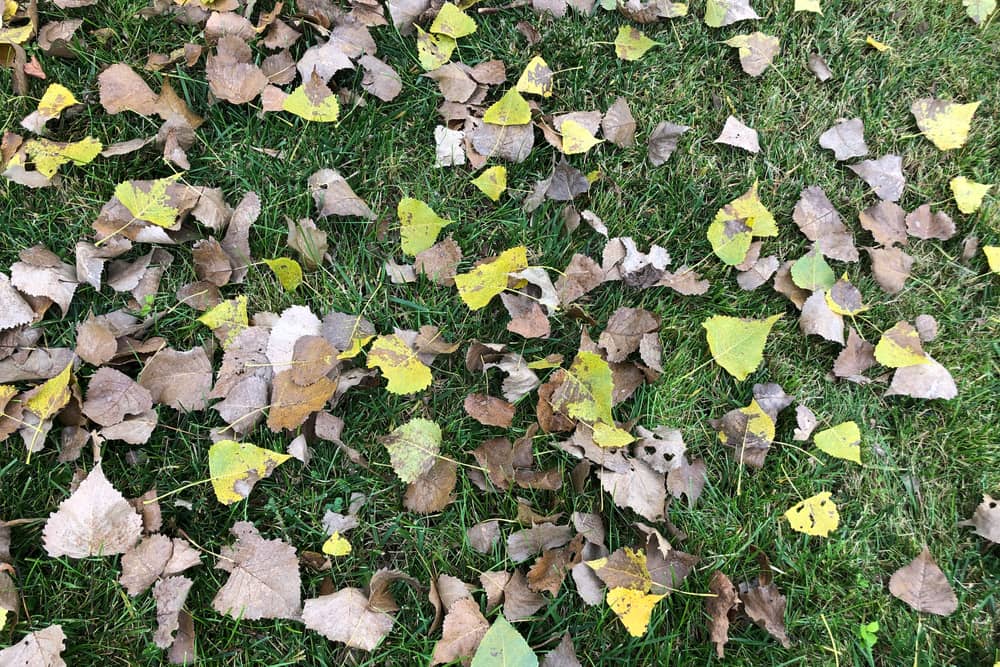
It happens most years somewhere in September. The big cottonwood that shaded half the yard all summer starts showing yellow patches, the lawn underneath fills up with leaves a month before anything else on the block has turned, and the question arrives by phone: "Is my cottonwood dying?"
Usually it isn't. A cottonwood that yellows and drops leaves in September after a dry stretch is most often doing exactly what the species is built to do — getting rid of leaves it can no longer keep watered. But a cottonwood that is genuinely failing can look much the same from the kitchen window, and the difference matters when the tree is sixty feet tall and leaning over your roof. This guide is the walk-around we would do in your yard: five checks you can make from the ground in about ten minutes, what each finding usually means, and what to do about it this fall. If you are not completely sure the tree is a cottonwood, start with our field guide to identifying an eastern cottonwood — silver maples and sycamores get mistaken for one all the time.
The Short Answer
- Scattered yellow leaves falling in September, with most of the canopy still green, is usually drought shedding. A cottonwood drops the leaves it can't support once the soil dries out. It isn't a disease, and on its own it isn't a sign the tree is dying.
- The warning signs are on the tree, not on the lawn. Leaves that turn brown and stay attached, twigs that are dry under the bark, bare branch tips at the top of the crown, sunken or cracked bark, and fungus at the base are what separate a stressed tree from a failing one.
- Water deeply now and keep at it until the ground freezes. Skip the fertilizer, and save pruning for winter.
- Next spring's leaf-out is the real verdict. A tree that was only thirsty leafs out full and even in April. A declining one doesn't.
- Dead wood over a house, a driveway, a play area or a power line doesn't wait for spring. That needs a professional look now.
Why Cottonwoods Are the First Tree on the Block to Turn
Eastern cottonwood is a river-bottom tree. In the wild its roots sit a few feet above the water table along the Arkansas or a creek, and it drinks freely all summer. Its big, flat, triangular leaves lose a lot of water on a hot, windy Kansas afternoon, and a mature tree carries an enormous number of them. On a clay lot in a Wichita subdivision there is no water table within reach, so by late summer the tree is often using water faster than the soil can give it back.
When that happens, the tree does the sensible thing and cuts its losses. It pulls what it can out of its oldest and most shaded leaves — usually the ones low in the canopy and toward the inside — turns them yellow, and lets them go. Kansas Forest Service and K-State horticulture staff single out water-loving species like cottonwood, willow and birch as the first to show it in a dry year. That is why a cottonwood can look perfectly green around the outside of the crown while the lawn beneath it fills with yellow.
Timing is the other clue. In a normal year a Wichita cottonwood colors up in October and drops the whole canopy over two or three weeks — our month-by-month cottonwood drop calendar lays out the full year. Yellowing that starts in late August or September is early, and early almost always points to water.
What about the twigs coming down with leaves still on?
This one alarms people: short twigs, a few inches to a foot long, falling with green or yellow leaves still attached. Cottonwoods and other poplars do this on purpose. It's called cladoptosis — a fancy word for self-pruning — and the tree sheds whole small shoots at a built-in joint to shrink its leaf area during drought. Look at the broken end: a self-pruned twig has a clean, rounded, almost cup-shaped base rather than a ragged snap. That's normal. A ragged break, or a twig that is dry and brittle all the way through, is a different story.
The 10-Minute Check: Five Things to Look at From the Ground
You don't need a ladder for any of this, and you shouldn't use one. A pair of binoculars helps with the upper canopy. Take phone photos of the whole tree from the same spot as you go — they will be useful next spring, and useful to whoever looks at the tree after you.
1. The pattern in the canopy
- Yellow scattered throughout, heaviest low and inside, outer crown still green: classic drought shedding.
- One limb or one side browning while the rest stays green: something local. A canker on that limb, borers, a crack, or roots damaged on that side of the tree. Trenching for a sprinkler line, a new driveway or a fence often shows up in the canopy one to three years after the digging.
- The top thinning out, with bare, dead branch tips poking up above the leaves: arborists call this staghorning, after the look of antlers. It means the tree has been losing ground for more than one season, and it's the pattern we take most seriously.
2. The leaves on the ground
Pick up a handful and look at both sides.
- Clean yellow, no spots: water stress.
- Yellow with a crispy brown edge: leaf scorch — the edges of the leaf dried out faster than the tree could supply them. Also drought and heat.
- Small dark-brown spots that run together: a fungal leaf spot, most common after a wet spring. It can speed the drop along, but on a mature tree it's cosmetic.
- Orange-yellow powdery bumps on the underside that rub off on your finger: cottonwood leaf rust, a common late-summer fungus. Also cosmetic on a big tree; rake up and bag the fallen leaves.
- Leaves chewed down to lace: cottonwood leaf beetle or another leaf feeder. A mature tree shrugs this off.
None of the leaf problems on that list will kill a healthy mature cottonwood by themselves. What they do is stack on top of drought, which is why a tree that had a wet spring, a leaf disease and then a dry August can look genuinely alarming by September.
3. What's still hanging on the tree
This is the check most people skip, and it's the one that matters most. Leaves that yellow and fall were shed on purpose. Leaves that turn brown and stay attached died faster than the tree could let them go — which can mean the shoot or the limb they are on has died with them. K-State's horticulture specialists draw the same line: gradual thinning is not a reason to panic; leaves dying in place is.
Then test the twigs you can reach from the ground:
- Scratch test: scrape a little bark off a twig with your thumbnail. Green and moist underneath means live wood. Brown and dry means dead.
- Bend test: a live twig bends. A dead one snaps.
- Buds: by fall a healthy cottonwood has next year's buds already formed where each leaf joins the twig. Shriveled or missing buds are a bad sign for that twig.
A few dead twigs are normal on any big tree. Dead twigs across whole sections of the crown are not.
4. The trunk and main limbs
- Sunken, discolored patches of bark — orange-brown, reddish or nearly black, sometimes dotted with tiny black pimples, sometimes oozing or putting out orange threads after a rain. That's the look of Cytospora canker. A canker is a patch where a fungus has killed the living layer just under the bark; once it circles a limb, everything beyond it dies. Cytospora is a weak fungus that mostly attacks cottonwoods and other poplars that are already stressed, with drought the most common trigger — which is exactly why it turns up after dry summers.
- Round or oval holes with sawdust-like debris — called frass — in bark cracks or piled at the base, or wet sap stains running down from holes: wood-boring beetles. Borers go after stressed trees, and the larger ones tunnel into the trunk and main roots.
- Dark, wet, sour-smelling streaks running down from a crack or an old pruning wound: wetwood, also called slime flux, a bacterial condition that is extremely common in cottonwoods and elms. It's ugly and it stains, but on its own it usually isn't a sign the tree is failing.
- Vertical cracks, splits, or bark falling away to show bare, dry wood; a seam opening where two big stems meet; large dead limbs still up in the canopy. These are structural problems, not just health problems, and they matter more the closer the tree stands to something you care about.
5. The base and the ground around it
- Mushrooms or hard, shelf-like fungi — called conks — growing from the trunk or the root flare, the spot where the trunk widens out into the roots at ground level. Conks are the fruiting bodies of wood-decay fungi, and on a cottonwood they usually mean decay inside the trunk or the main roots.
- A new lean, cracked or heaving soil on one side of the base, or roots lifting on the opposite side.
- Recent digging, trenching, grade changes or soil piled over the roots within the drip line — the circle on the ground under the outermost branches. Root damage is one of the most common hidden reasons a cottonwood declines on one side.
What the Checks Usually Add Up To
A thirsty tree (the most common result)
Yellow scattered through the crown, clean yellow leaves on the lawn, a few self-pruned twigs, green wood when you scratch a twig, buds set for next year, and nothing wrong with the bark or the base. That's a healthy cottonwood getting through a dry end of summer. Water it, keep an eye on it, and let next spring confirm it.
A stressed tree with a second problem
Drought plus a canker on a limb, borer holes, heavy leaf disease on top of a dry year, or damage on one side of the root zone. This is where an arborist's assessment is worth the most, because the job is working out which problem is actually driving the decline and whether it can be managed — pruning out a cankered limb in winter, dealing with what happened in the root zone, or looking at our plant health care service. Caught early, a lot of these trees have good years left.
A failing tree
Brown leaves hanging on in whole sections, staghorning at the top, large dead limbs, big cankers on the trunk, conks at the base, cracks, or a new lean. Cottonwood is soft, fast-grown wood, and once it is dead or decayed it turns brittle quickly — dead cottonwood limbs are among the likeliest to drop without warning. If that tree is within reach of the house, the driveway, a fence line the kids use, or a power line, this is a removal conversation, not a wait-and-see one. Our guide to cottonwood trees in Wichita covers the species' structural risks and what removal typically involves.
How to Water a Drought-Stressed Cottonwood This Fall
Lawn sprinklers don't do it. They wet the top few inches, and a mature cottonwood needs water soaked about a foot deep across a wide area.
- Where: most of a tree's water-absorbing roots are in the top 12 to 18 inches of soil, and they spread well past the drip line. Water a wide ring from a few feet off the trunk out to and beyond the edge of the branches — not against the trunk.
- How much: extension services commonly use about 10 gallons per inch of trunk diameter per watering. On a big cottonwood that is a lot of water, which is why a soaker hose snaked around the drip line and left running slowly for several hours, or a sprinkler moved around the ring over a day, works far better than standing there with a hose.
- How to tell it's enough: a long screwdriver should push about a foot into the soil without much force.
- How often: every two to three weeks through a dry fall, until the ground freezes. In a dry winter, water about once a month on a day above 40°F while the ground isn't frozen, around midday so it soaks in before night.
- Mulch: two to four inches of wood-chip mulch in a wide ring helps hold the moisture in. Keep it a few inches off the bark.
And two things not to do. Don't fertilize a drought-stressed tree — fertilizer pushes new growth the roots can't support, and the salts can make water stress worse. And don't do heavy pruning now: fresh cuts on a stressed cottonwood in late summer are an open door for canker fungi. Deadwood removal and structural pruning belong in the dormant season, and our guide to the best time to prune trees in Kansas explains why.
What's Safe to Do Yourself — and What Isn't
A homeowner can do a lot for a stressed cottonwood. The line is drawn by height, size, and anything electrical.
Reasonable to do yourself:
- Watering, mulching, and raking and bagging leaves with rust or leaf spot.
- All five checks above, from the ground.
- Clipping small dead twigs you can reach from the ground with hand pruners or loppers — roughly anything thinner than your thumb, with both feet on the ground.
- Photographing the tree now, and again next spring from the same spot.
Not a DIY job:
- Any dead limb thicker than your wrist, and anything above head height. Dead cottonwood is brittle and heavier than it looks, and a limb that is already cracked can let go the moment it's disturbed.
- Anything that needs a ladder, climbing, or a chainsaw overhead. Ladder-and-chainsaw work is where serious homeowner tree injuries come from.
- Hangers — broken limbs caught up in the canopy. Stay out from under them, and keep kids and pets out too.
- Anything near a power line. Not the service line to the house, not the lines along the alley. Keep yourself and every tool well clear. A limb on a line is a call to Evergy — and to 911 if a line is down or sparking — before anyone else.
- Cutting cankered limbs out of a mature tree, and removal. Both need rigging and the right cut in the right place; our case against DIY tree removal explains why.
When a Yellowing Cottonwood Can't Wait
Most of this guide is about a slow question. A few things turn it into a fast one:
- A large limb that is cracked, split, or hanging in the canopy.
- A fresh crack in the trunk, or a seam between two stems that has opened up.
- A sudden new lean, especially with soil lifting on the far side.
- Limbs on or against power lines.
- A tree or a major limb already down on a roof, a car, or a fence.
Those are calls for our 24/7 emergency tree service, not for next month's schedule. Keep everyone clear of the tree, and of anything touching a line, until help arrives.
The Timeline: This Fall, This Winter, Next Spring
- Now through the first hard freeze: deep water every two to three weeks, do the five checks, take your photos, and get anything with dead wood over a target looked at.
- Dormant season, December through early March: the right time to remove deadwood, cut out cankered limbs in dry weather, and do structural pruning. The canopy is bare, the whole framework is visible, and there is far less fungal activity to infect fresh cuts. Book it in the fall — winter slots fill up with storm work.
- Next April and May: the verdict. A tree that was only thirsty leafs out full and even. Thin leaf-out, undersized leaves, leaves only on the lower and inner parts of the crown, or branch tips that never leaf out at all mean the tree is still losing ground — and that's the time for an in-person assessment if you haven't had one.
One caution: drought damage lags. A cottonwood can come through a dry summer looking fine and show the dieback one to three years later, especially if borers or canker got a foothold while it was stressed. One good spring is encouraging, but it isn't a clean bill of health for a tree that went into it carrying dead limbs.
Frequently Asked Questions
Why is my cottonwood turning yellow and dropping leaves in September? Almost always water. Cottonwood is a river-bottom species that uses a great deal of water, and when late-summer soil dries out it sheds the leaves it can't support, oldest and most shaded first. In a normal year it wouldn't color until October, so September yellowing after a dry stretch is a drought response, not a sign of disease.
Is my cottonwood dying if it's losing leaves early? Not usually. Leaves that yellow and fall were shed deliberately. The warning signs are leaves that turn brown and stay attached, twigs that are brown and dry under the bark, bare dead branch tips at the top of the crown, sunken or cracked bark, and fungus growing at the base.
Will a drought-stressed cottonwood recover? A healthy cottonwood that has only shed leaves usually leafs out normally the next spring, especially if it is deep-watered through the fall. Recovery is less likely when the drought has already let canker, borers or decay get established, or when dieback has been getting worse over several years.
How much should I water a cottonwood in the fall? Extension guidance commonly uses about 10 gallons per inch of trunk diameter per watering, soaked roughly a foot deep across a wide ring out past the drip line, every two to three weeks in a dry fall until the ground freezes. A soaker hose run slowly for several hours is the easiest way to get it there.
Why is my cottonwood dropping small branches with the leaves still on? Cottonwoods self-prune in drought, shedding short twigs at a built-in joint to cut their leaf area. The broken end is clean and rounded, and it's normal. Larger dead limbs, or breaks that are ragged and dry, are not normal and should be looked at.
What does Cytospora canker look like on a cottonwood? Sunken, discolored patches of bark — orange-brown, reddish or black — often with tiny black bumps, and sometimes orange threads after rain. Leaves beyond the canker wilt and brown. It mostly attacks trees that are already stressed, drought especially. Cankered limbs are cut out in dry weather during the dormant season.
Should I cut down a cottonwood that's turning yellow early? Not for the yellowing alone. Removal comes into it when the tree has large dead limbs, trunk decay or conks, major cankers, cracks, a new lean, or several years of worsening dieback — and especially when it stands close to the house, a driveway or power lines.
Can I prune the dead branches off my cottonwood myself? Small dead twigs you can reach from the ground with hand pruners, yes. Anything thicker than your wrist, anything overhead, anything that needs a ladder or a chainsaw, and anything near a power line belongs to a professional crew.
Worried About a Cottonwood in Your Yard?
If the checks turned up more than a thirsty tree — or you just want a second set of eyes on a big cottonwood over the house — that's what an in-person assessment is for. Joe Kohnen is an ISA Certified Arborist and can tell you on site whether you're looking at drought, a problem that can be managed, or a tree that needs to come down, and what each of those would involve. Kohnen's Tree Service is family-owned, fully insured, and rated 4.9 from 130+ Google reviews.
We work across Wichita and the surrounding communities from our Park City base, including Derby, Andover, Bel Aire and Maize.
Request a free in-person estimate, or call (316) 207-4740. We respond the same day.